Preparation
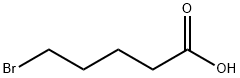
In a 250 mL three-necked flask equipped with a stirrer and thermometer, a dichloromethane solution of 5-bromopentanol and the crown ether catalyst were added. The stirrer was started, and finely ground potassium permanganate was added in small batches while stirring rapidly, which took about 1 hour. After the addition was complete, stirring continued until the reaction temperature no longer rose. The reaction time was then determined using a TLC plate (different polarities diffuse at different rates on the plate). Using n-butanol:acetic acid:water = 4:1:1 as the developing solvent, the plate was spotted every 0.5 hours, ultimately determining that the reaction was complete after 1 hour. During the reaction, a large amount of manganese dioxide precipitate was produced. The reaction mixture was filtered, washed with water to remove the aqueous phase, and then washed with NaOH solution to remove the crown ether and CH2Cl2. The sodium 5-bromopentanate in the aqueous phase was then washed with acid, and the bottom layer was taken out to obtain the initial product. After drying, 16.2 g of 5-Bromovaleric acid was obtained, with a yield of 90%.
Description
5-Bromovaleric acid is an important raw material for organic synthesis and a commonly used reagent for chemical reactions. It can be used in the synthesis of the natural mosquito egg-laying pheromone red-6-acetoxy-5-hexadecanolactone, alkylammonium amphoteric amino acid derivatives and water-soluble nanoplatelets.
Chemical Properties
yellowish to light brown crystals or cryst. powder
Application
5-Bromovaleric acid was used in the preparation of:
-
5-(3-dimethylammonio)propylammonio pentanoate bromide via reaction with 1,1-dimethyl-1,3-propylenediamine
-
nanodiamond functionalized by carboxylic acid groups
-
water-soluble nanoplatelets of potassium graphite
Uses
5-Bromovaleric acid is used in the synthesis of inhibitors for aminoglycoside resistant bacteria. 5-Bromovaleric acid is also used in the preparation of sequence specific base pair mimics as topoisomerase IB inhibitors.
Purification Methods
Crystallise the acid from pet ether. [Beilstein 2 IV 883.]