Contact allergens
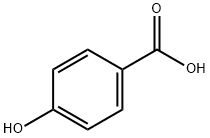
This substance is one of the parabens family. Parabens are esters formed by p-hydroxybenzoic acid
and an alcohol. They are largely used as biocides in
cosmetics and toiletries, medicaments, or food. They
have synergistic power with other biocides. Parabens
can induce allergic contact dermatitis, mainly in
chronic dermatitis and wounded skin.
Synthesis
GENERAL METHOD: Thionyl chloride (1.16 g, 1.5 eq.) was slowly added dropwise to a solution of p-hydroxybenzoic acid (1.0 g, 1.0 eq.) dissolved in isopropanol (15 ml) at 0 °C. The reaction mixture was heated to reflux under nitrogen protection until thin layer chromatography (TLC) monitoring showed complete consumption of p-hydroxybenzoic acid. After completion of the reaction, the solvent was removed by distillation under reduced pressure. The crude product was purified by silica gel column chromatography with the eluent being a solvent mixture of ethyl acetate/hexane to give the final isopropyl 4-hydroxybenzoate.
References
[1] Synthesis, 2003, # 16, p. 2479 - 2482
[2] Phosphorus, Sulfur and Silicon and the Related Elements, 2004, vol. 179, # 6, p. 1187 - 1191
[3] Bioorganic and Medicinal Chemistry, 2013, vol. 21, # 6, p. 1564 - 1569
[4] Journal of the Society of Chemical Industry, London, 1947, vol. 66, p. 175
[5] Archiv der Pharmazie (Weinheim, Germany), 1938, vol. 276, p. 154,162