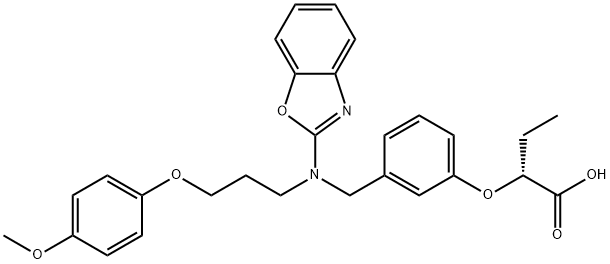
Pemafibrate (3 mg/kg, p.o.) increases plasma h-apoA-I in human apoA-I (h-apoA-I) transgenic mice, and shows higher levels of plasma h-apoA-I than fenofibrate at 300 mg/kg[1]. Pemafibrate (0.03mg/kg) decreases levels of triglycerides and aspartate aminotransferase (AST) in PEMA-L (db/db) mice. Pemafibrate (0.1mg/kg) not only shows such effects but increases liver weight in PEMA-H (db/db) mice. Pemafibrate enhances the pathogenesis in a rodent model of nonalcoholic steatohepatitis (NASH). Pemafibrate significantlly reduces the grade of hepatocyte ballooning in PEMA-H mice. Furthermore, Pemafibrate modulates lipid turnover and induces uncoupling protein 3 (UCP 3) expression in the liver[2]. Pemafibrate (K-877, 0.0005%) contained in high-fat diet (HFD) inhibits the body weight gain in mice. Pemafibrate significantly decreases the abundance of triglyceride (TG)-rich lipoproteins, including remnants, in postprandial plasma of mice. Pemafibrate also decreases intestinal mRNA expression of ApoB and Npc1l1[3].