Chemical Properties
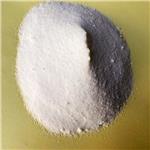
White to pale yellow powder
Uses
N-Chlorophthalimide may be employed in the synthesis of:
- α-amino acetal
- α-amino nitro compounds
- vicinal diamine
- α,β-unsaturated vicinal haloamino nitro compound
It may also be used as a chlorination reagent for the synthesis of 3-(methylthio)oxindoles.
General Description
N-Chlorophthalimide in anhydrous acetic acid serves as a useful oxidizing reagent for use in various direct titrimetric analyses.
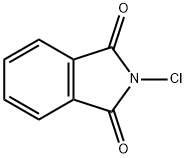
N-Chlorophthalimide can be synthesized by reacting phthalimide,
t-butyl hypochlorite, water and
t-butyl alcohol. It participates in the synthesis of 2-amino-3-benzoyl-α-(methylthio)phenylacetamide.
Synthesis
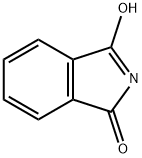
General procedure for the synthesis of N-chlorophthalimide from 3-hydroxy-1H-isoindol-1-one: Anhydrous aluminum trichloride (AlCl3, 1 eq., 10 mmol, 1.36 g) was added to an anhydrous acetonitrile (CH3CN, 100 mL) solution of lead tetraacetate (Pb(OAc)4, 1 eq., 10 mmol, 4.52 g). The mixture was stirred at room temperature for 5 minutes before phthalimide (1 eq., 10 mmol, 1.5 g) was added. The resulting mixture was gently refluxed under nitrogen protection for 20 h and subsequently cooled to room temperature. The solvent was removed by rotary evaporation and the crude product was purified by column chromatography using pure dichloromethane (DCM) as eluent. Yield: 1.32 g, 71% yield.1H NMR (300 MHz, CDCl3): δ 7.94-7.91 (m, 2H), 7.82-7.79 (m, 2H) ppm.
References
[1] Synthesis, 2009, # 16, p. 2797 - 2801
[2] Synlett, 2006, # 2, p. 194 - 200
[3] Catalysis Today, 2018, vol. 308, p. 94 - 101
[4] Fortschr. Teerfarbenfabr. Verw. Industriezweige, vol. 6, p. 1302
[5] Fortschr. Teerfarbenfabr. Verw. Industriezweige, vol. 8, p. 163