Uses
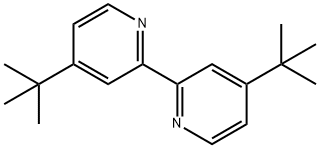
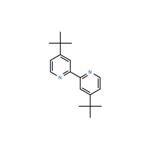
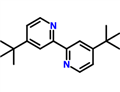
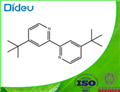
4,4'-Di-tert-butyl-2,2'-dipyridyl acts as a reagent in the preparation, antiproliferative and cytotoxic activity of apoptotic ruthenium nitrogen heterocyclic complexes via combinatorial library synthesis.
Synthesis
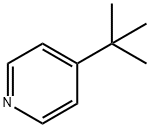
In this embodiment, the synthesis of 4,4'-di-tert-butyl-2,2'-bipyridine from 4-tert-butylpyridine was investigated. This was done as follows: 4-tert-butylpyridine (0.5 mmol) was reacted with SD (1 to 2 molar equivalents) in THF (2 to 4 mL) at a reaction temperature of 50°C for a reaction time of 1 to 24 hours. Upon completion of the reaction, the reaction products were isolated and purified according to the method of Example 1 to obtain 4,4'-di-tert-butyl-2,2'-bipyridine (target product), 4-tert-butyl-1,4-dihydropyridine (byproduct 1), and 4,4',4''-tri-tert-butyl-2,2':6',2''-tripyridine (byproduct 3), and the respective yields were calculated. Also, the recovery of unreacted 4-tert-butylpyridine was calculated. The experimental results showed that the highest yield of 4,4'-di-tert-butyl-2,2'-bipyridine was achieved under the optimal conditions (0.5 mmol of 4-tert-butylpyridine reacted with 1 molar equivalent of SD in 4 mL of THF at 50 °C for 6 h) and no by-products were generated. In addition, the use of 2 molar equivalents of SD resulted in a lower yield and material balance. Comparison with Example 1 shows that decreasing the concentration of 4-tert-butylpyridine and SD relative to THF contributes to higher yields.
References
[1] Patent: US2018/282278, 2018, A1. Location in patent: Paragraph 0057; 0127-0130
[2] Helvetica Chimica Acta, 1980, vol. 63, # 6, p. 1675 - 1702
[3] Journal of the Chemical Society, Dalton Transactions: Inorganic Chemistry (1972-1999), 2000, # 1, p. 63 - 68
[4] Inorganica Chimica Acta, 2011, vol. 365, # 1, p. 127 - 132
[5] Synthesis (Germany), 2013, vol. 45, # 22, p. 3099 - 3102