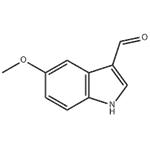
Uses
reactant in synthesis of tryptophan dioxygenase inhibitors as potential anticancer immunomodulators 1 reactant in preparation of inhibitor of the C-terminal domain of RNA polymerase II reactant in preparation of imidazopyridines and imidazobenzothiazoles 2 reactant in preparation of fluorescent neuroactive probes for brain imaging 3 reactant in preparation of antibacterial agents 4 reactant in synthesis of antiandrogens.
Synthesis
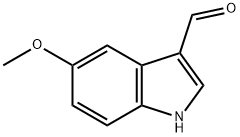
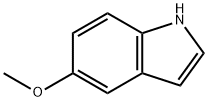
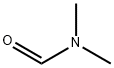
GENERAL STEPS: Oxalyl chloride (0.3 mL) was added dropwise to stirring N,N-dimethylformamide (DMF, 3 mL) under ice bath cooling. The reaction mixture was stirred continuously at 0 °C for 1 hour. Subsequently, a solution of 5-methoxyindole (4 mmol) dissolved in DMF (1.5 mL) was added dropwise to the above mixture. The resulting mixture was stirred at room temperature for 5 hours. Upon completion of the reaction, 2 N sodium hydroxide solution (2 mL) was added and the mixture was heated to 100°C maintained for 10 minutes. The reaction solution was cooled and extracted with ethyl acetate (3 x 50 mL). The organic phases were combined and washed sequentially with water and saturated saline. The organic layer was dried over anhydrous sodium sulfate and concentrated under reduced pressure to obtain the crude product. The crude product was purified by fast column chromatography with the eluent of ethyl acetate/petroleum ether (3:1, v/v) to finally obtain pure 5-methoxyindole-3-carboxaldehyde.
References
[1] Organic Letters, 2013, vol. 15, # 11, p. 2636 - 2639
[2] Chinese Chemical Letters, 2010, vol. 21, # 11, p. 1307 - 1309
[3] Synthetic Communications, 1988, vol. 18, # 7, p. 671 - 674
[4] European Journal of Medicinal Chemistry, 2013, vol. 65, p. 158 - 167
[5] Journal of the Chemical Society, Perkin Transactions 1: Organic and Bio-Organic Chemistry (1972-1999), 1993, # 21, p. 2561 - 2566