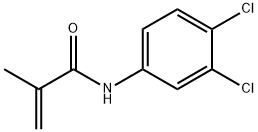
Description
Chloranocryl is an obsolete contact herbicide. Little data is available regarding its environmenal fate, ecotoxicology or impact on human health.
Chemical Properties
White powder. Melting point 128°C. Insoluble in water, soluble in acetone (30%), pyridine (33%), dimethylformamide (51%), and xylene (25%).
Uses
Chloranocryl functions as a herbicide for agricultural purposes.
Definition
ChEBI: Chloranocryl is an anilide.
Production Methods
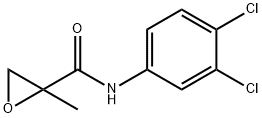
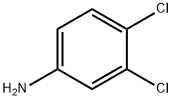
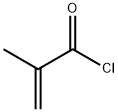
Chloranocryl is produced through a multi step chemical synthesis typical of anilide herbicides. According to the synthesis data, the process begins with 3,4 dichloroaniline, which is reacted with methacryloyl chloride in a cooled polar solvent such as dimethylacetamide, with the temperature kept below 0 DegC to control reactivity. The mixture is then stirred at ambient temperature for an extended period to complete acylation, forming the key intermediate 3,4 dichloro N methacryloyl aniline. This intermediate is subsequently converted into the final herbicidal structure through additional steps involving epoxy acyl intermediates and solvent based purification.
Mechanism of action
Contact action. PSII inhibitor resulting in plant cell death and plant necrosis.