Uses
2-Methyl-1,3-thiazole-4-carboxylic acid serves as a coupling precursor: activated with HATU/DIPEA in DMF, it is condensed with an amine to give the corresponding amide, and with DCC/DMAP/Et3N in CH2Cl2 it is coupled to L-serine methyl ester hydrochloride to form methyl (S)-3-hydroxy-2-{[(2-methyl-1,3-thiazol-4-yl)carbonyl]amino}propanoate[1][2].
Synthesis
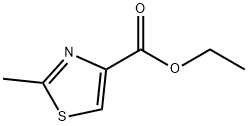
The general procedure for the synthesis of 2-methyl-4-thiazolecarboxylic acid using ethyl 2-methylthiazole-4-carboxylate as starting material is as follows:
1. dissolve ethyl 2-methylthiazole-4-carboxylate in tetrahydrofuran (THF).
2. add 10% (w/v) aqueous solution of potassium hydroxide (KOH) to the above solution.
3. The reaction mixture was stirred at room temperature until thin layer chromatography (TLC) showed complete disappearance of the raw material.
4. pH of the reaction solution was adjusted to 4 with 1 M hydrochloric acid (HCl).
5. The reaction solution was extracted with ethyl acetate (EtOAc). 6.
6. The organic phase was dried with anhydrous magnesium sulfate (MgSO).
7. The organic phase was concentrated to give the target product 2-methyl-4-thiazolecarboxylic acid.
References
[1] Peña, S., Scarone, L., Manta, E., & Serra, G. (2011). An efficient synthesis of 2,4′-bi-1,3-oxa(thia)zoles as scaffolds for bioactive products. Chemistry of Heterocyclic Compounds, 47(6), 703–709.
https://doi.org/10.1007/s10593-011-0823-z [2] Amour, A., Barton, N., Cooper, A. W. J., Inglis, G., Jamieson, C., Luscombe, C. N., Morrell, J., Peace, S., Perez, D., Rowland, P., Tame, C., Uddin, S., Vitulli, G., & Wellaway, N. (2016). Evolution of a Novel, Orally Bioavailable Series of PI3Kδ Inhibitors from an Inhaled Lead for the Treatment of Respiratory Disease. Journal of Medicinal Chemistry, 59(15), 7239–7251.
https://doi.org/10.1021/acs.jmedchem.6b00799