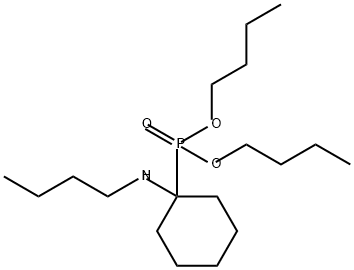
Description
Buminafos is an obsolete desiccant and defoliant. It has a moderate aqueous solubility and is volatile. It is generally non-persistent in soil systems. It has a low mammalian toxicity. Little is known regarding its toxicity to biodiversity.
Uses
Buminafos can be employed as a herbicide. It has been demonstrated to change the activity of antioxidative enzymes and chlorophyll content in plant.
Production Methods
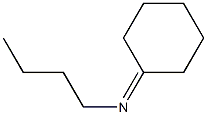
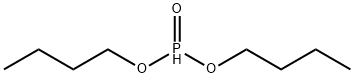
Buminafos is commercially synthesised through esterification of a cyclohexylphosphonic acid derivative with butanol. The production process begins with the preparation of a cyclohexylamine intermediate, which is reacted with phosphorus oxychloride to form a phosphonic acid derivative. This intermediate undergoes esterification with butanol in the presence of a catalyst to yield the dibutyl ester form of buminafos. The reaction is carried out under controlled temperature and pH conditions to ensure high yield and purity.
Agricultural Uses
Buminafos is a compound used as a defoliant or
harvesting aid in potato and cotton.
Mechanism of action
Not selective, contact absorbed by leaves and shoots. Acetylcholinesterase (AchE) inhibitor.
Safety Profile
Moderately toxic by severalroutes. When heated to decomposition it emits very toxicfumes of POx and NOx.
Pesticide Type
Plant Growth Regulator; Herbicide