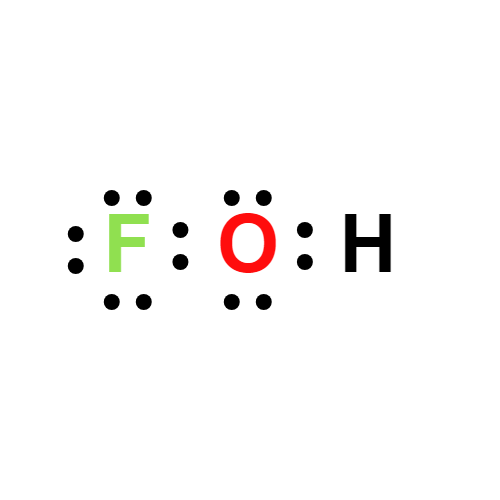
Hypofluorousacid (8CI,9CI) Chemical Properties,Usage,Production
Chemical Properties
Hypofluoric acid is a relatively novel oxidant. The OF bond is unstable; oxygen is connected to fluorine, which is more electronegative than oxygen, so that the oxygen in it is biased to be positively charged. It is a highly electrophilic oxygen-donating reagent (the oxygen in hypofluoric acid) and strong applicability.
Uses
Hypofluoric acid is generally used as an oxygen-donating reagent or a hydroxylating reagent in its acetonitrile solution.
Application
The HOF.MeCN complex is used for tertiary hydroxylations, epoxidations, and oxidations of amines, alcohols, ketones, aromatic compounds, and sulfides.
Definition
ChEBI: Hypofluorous acid is a fluorine oxoacid. It is a conjugate acid of a hypofluorite.
storage
HOF is a very unstable substance and of little use in synthetic chemistry. Neat liquid HOF can be unpredictably explosive at temperatures above -40 °C. Its acetonitrile complex is much more stable but nevertheless has to be prepared in situ and, for all practical purposes, has to be reacted soon after its formation. The concentration of the reagent is determined iodometrically (HOF + 2KI -> I2 + KF + KOH). Both forms of the hypofluorous acid may be toxic and should be treated accordingly. Use in a fume hood.
Hypofluorous acid (HOF) is the only stable hypohalous acid containing fluorine, with unique electronic and structural characteristics different from other halogen oxoacids.