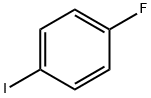
Preparation
In a 100 ml round-bottom flask, add 10 ml of glacial acetic acid and 5 ml of acetic anhydride, add a magnetic stirrer, and cool to 5–10 °C in an ice-water bath. Then add 1.7 g (13.4 mmol) of iodine and 0.48 g (2.25 mmol) of sodium periodate. Maintaining the temperature, slowly add 5 ml of concentrated sulfuric acid dropwise. After 10 min, slowly add 1.5 g (15.6 mmol) of fluorobenzene. Adjust the reaction temperature to room temperature and continue stirring the reaction mixture for 5 h. Add 1 g of sodium sulfite dissolved in 40 ml of ice water. After 10 min, stop stirring and extract with 2 × 40 ml of dichloromethane. Combine the organic layers and wash with 3 × 50 ml of saturated sodium bicarbonate solution. Dry the organic layer with anhydrous sodium sulfate. Distill off the solvent under reduced pressure. The product is a yellow oil, yielding 2.46 g of product, with a yield of 71%.
Description
4-[18F] Fluoroiodobenzene is a versatile building block in 18F radiochemistry and is used in various transition metal-mediated C-C and C-N cross-coupling reactions. Cross-coupling reaction of 4-fluoroiodobenzene with potassium pentafluorophenyltrifluoroborate in the presence of different palladium catalysts and silver oxide in toluene has been investigated.
Chemical Properties
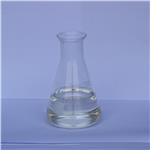
colorless to light yellow liquid
Uses
4-Fluoroiodobenzene was used in the preparation of fluorotriphenylene derivatives. 4-[F] Fluoroiodobenzene is a versatile building block in 18F radiochemistry and is used in various transition metal-mediated C-C and C-N cross-coupling reactions.
General Description
4-[
18F] Fluoroiodobenzene is a versatile building block in
18F radiochemistry and is used in various transition metal-mediated C-C and C-N cross-coupling reactions. Cross-coupling reaction of 4-fluoroiodobenzene with potassium pentafluorophenyltrifluoroborate in the presence of different palladium catalysts and silver oxide in toluene has been investigated.