Chemical Properties
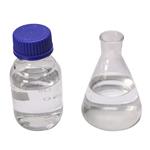
CLEAR COLOURLESS TO YELLOW-GREY LIQUID
Uses
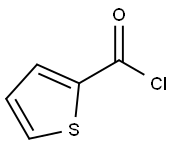
2-Thiophenecarbonyl chloride was used in the synthesis of building blocks derived from ornithine by undergoing acylation/sulphonation of copper complex of orthinine.
Uses
2-Thiophenecarbonyl Chloride is used in the synthesis of substituted pyridines as selective and highly effective GPR119 agonists. It is also seen in the preparation of diuretics.
General Description
The postfunctionalization reaction of 2-thiophenecarbonyl chloride with single walled carbon nanotubes (SWCNTs) was studied.
Synthesis
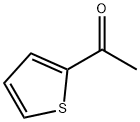
The general procedure for the synthesis of 2-thiophenecarbonyl chloride from 2-acetylthiophene was as follows: to a mixed solution containing 2-acetylthiophene (0.108 mL, 1.0 mmol), pyridine (0.016 mL, 0.20 mmol), and chlorobenzene (0.35 mL), disulfur dichloride (S2Cl2, 0.16 mL, 2.0 mmol) was slowly added at room temperature (S2Cl2, 0.16 mL, 2.0 mmol), while stirring continuously. After the reaction mixture was stirred for 1 hour and 45 minutes, sulfuryl chloride (SO2Cl2, 0.162 mL, 2.0 mmol) was added dropwise, followed by continued stirring for 0.5 hours at room temperature. Next, the reaction mixture was heated to 132 °C and stirred at this temperature for 14 hours. Upon completion of the reaction, the reaction mixture was diluted with deuterated chloroform (CDCl3, 2 mL) and the internal standard (tributyl phosphate, 1BU3PO4, 0.0552 mL, 0.20 mmol) was added for nuclear magnetic resonance (1H NMR) analysis. The analytical results showed that the yield of 2-thiophenecarbonyl chloride was 90%.
References
[1] Patent: WO2017/5606, 2017, A1. Location in patent: Page/Page column 31-32
[2] Journal of Organic Chemistry, 2015, vol. 80, # 20, p. 10370 - 10374
[3] Patent: WO2016/150937, 2016, A1. Location in patent: Page/Page column 27
[4] Patent: WO2016/202757, 2016, A1. Location in patent: Page/Page column 30; 31
[5] Patent: TW2017/36360, 2017, A