Synthesis
The conventional synthetic method for 3-(2-chloroethyl)-6,7,8,9-tetrahydro-9-hydroxy-2-methyl-4H-pyrido[1,2-a]pyrimidin-4-one begins with 2-amino-3-benzyloxypyridine. A one-step condensation reaction with phosphine oxychloride yields the target product with a benzyl-protected hydroxyl group. The benzyl group is then removed under palladium-carbon hydrogenation to obtain 3-(2-chloroethyl)-6,7,8,9-tetrahydro-9-hydroxy-2-methyl-4H-pyrido[1,2-a]pyrimidin-4-one. It is worth noting that a hydrogen pressure of one atmosphere is sufficient for the palladium-carbon hydrogenation process, and heating conditions can yield better reaction results.

Uses
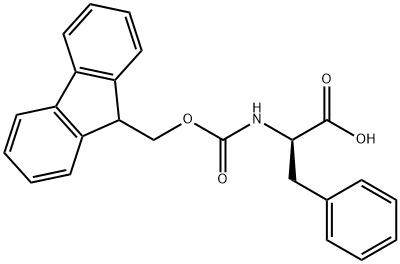
N-Fmoc-D-phenylalanine is an N-Fmoc-protected form of D-Phenylalanine (P319410). D-Phenylalanine is an essential amino acid that serves as a primary precursor for the biosynthesis of catecholamines in the body. D-Phenylalanine is also known to antagonize stress-induced analgesia in humans, and also acts as an anti-enkephalinase agent.