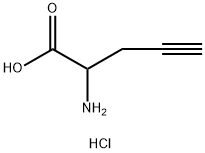
Description
Hydrogen sulphide (H
2S), a naturally occurring gasotransmitter, is a potent vasodilator and pro-
inflammatory mediator. DL-
Propargyl glycine (PAG) is an irreversible inhibitor of the H
2S synthesizing enzyme cystathionine-
γ-
lyase (CSE). PAG blocks H
2S synthesis activity in rat liver preparations with an IC
50 value of 55 μM and abolishes the rise in plasma H
2S in anaesthetized rats induced with hemorrhagic shock. At concentrations ranging from 25-
100 mg/kg, PAG can reduce H
2S-
associated inflammation in rodent models of pancreatitis, oedema, and endotoxemia.
References
[1] MADHAV BHATIA. Pro-inflammatory effects of hydrogen sulphide on substance P in caerulein-induced acute pancreatitis[J]. JOURNAL OF CELLULAR AND MOLECULAR MEDICINE, 2007, 12 2: 580-590. DOI:
10.1111/j.1582-4934.2007.00131.x[2] MADHAV BHATIA. Hydrogen sulphide is a mediator of carrageenan-induced hindpaw oedema in the rat[J]. British Journal of Pharmacology, 2009, 145 2: 141-144. DOI:
10.1038/sj.bjp.0706186[3] MARIKA COLLIN. Inhibition of endogenous hydrogen sulfide formation reduces the organ injury caused by endotoxemia[J]. British Journal of Pharmacology, 2009, 146 4: 498-505. DOI:
10.1038/sj.bjp.0706367