Synthesis
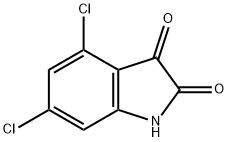
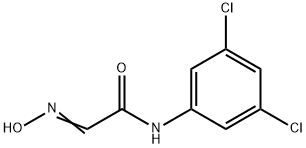
General procedure for the synthesis of 4,6-dichlorodihydroindole-2,3-dione from 2-hydroxyimino-N-(3,5-dichlorophenyl)-acetamide:
1. Preparation of intermediate I-2: Intermediate I-1 (10.0 g, 42.9 mmol) prepared above was slowly added to concentrated hydrochloric acid. Under ice bath conditions, sulfuric acid (50 mL) was added to ensure that the temperature of the reaction mixture was kept below 50 °C.
2. After the reaction was complete, the dark colored solution was heated at 90 °C for 10 min.
3. The reaction mixture was cooled to room temperature and then poured into 10 times the volume of ice and stirred vigorously for 1 hour.
4. The insoluble solid formed was collected, washed with water and dried under vacuum to give 4,6-dichlorodihydroindole-2,3-dione (8.90 g, 96% yield) as an orange solid.
- TLC Rf = 0.4 (EtOAc:hexane=1:3)
- Melting point: 228-230°C
- 1H NMR (DMSO-d6) δ: 6.97 (d, J=1.8Hz, 1H, ArH), 7.32 (d, J=1.8Hz, 1H, ArH), 11.42 (br s, 1H, NH)
- MS (EI) m/e: 216 [M+], 188 [M+-CO2], 160.
in vivo
CFL-120 (5 mg/kg, 5 treatments; 15 mg/kg, 5 treatments; 30 mg/kg, 3 treatments; i.p.) reduces tumor growth in subcutaneous H1792 (KRasG12C mutant) and LCLC-103H (KRasWT) human lung cancer-bearing mice[1].
Pharmacokinetic Parameters of CFL-120 in NOD-SCID female mice[1].
| PK parameters | CFL-137 |
| Cmax (ng/mL) | 337 ± 123 |
| Tmax (h) | 0.25 |
| AUCt (ng/mL*h) | 169 ± 56 |
| t1/2 (h) | 4.4 ± 0.6 |
| Vd (mL) | 12,096 ± 4000 |
| CL(mL/h) | 1895 ± 539 |
NOD-SCID female mice, 15 mg/kg IP
[1].
| Animal Model: | NOD/SCID female mice (KRasWT (LCLC-103H) or KRasG12C (H1792) tumors)[1] |
| Dosage: | 5 mg/kg, 5 treatments; 15 mg/kg, 5 treatments; 30 mg/kg, 3 treatments |
| Administration: | I.p. |
| Result: | Reduced tumor growth compared to the control group in KRasG12C mutated model for 35.8%. |