Description
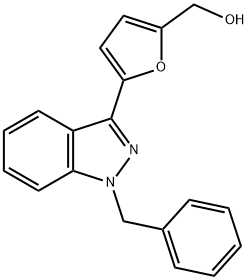
YC-1 (170632-47-0) is a nitric oxide-independent activator of soluble guanylyl cyclase (sGC). Significantly elevates cGMP levels and inhibits collagen-stimulated aggregation of rabbit platelets (IC50= 14.6 μM).1Induces human endometrial cancer cell senescence via modulation of HIF1α activity.2Induces degradation of HIF1α.3Protects against glutamate-induced neuronal damage4and β-amyloid-induced toxicity in differentiated PC12 cells5.
Uses
YC-1 has been used as a hypoxia-inducible factor 1α (HIF-1α) inhibitor:
- to reduce hypoxia induced Jagged1 expression in cardiomyocytes (CMs)
- to study its effect on progenitor expansion and CD34+ and side population (SP) cell phenotype and on the proliferation rate of cells with an ability to form long term colony forming units
- to study its effect on regulating sphingosine 1-phosphate (S1P) bound to albumin induced plasminogen activator inhibitor 1 (PAI-1) expression by activating Rho/ Rho-associated protein kinase (ROCK) pathway.
Definition
ChEBI: Lificiguat is a member of the class of indazoles that is 1H-indazole which is substituted by a benzyl group at position 1 and a 5-(hydroxymethyl)-2-furyl group at position 3. It is an activator of soluble guanylate cyclase and inhibits platelet aggregation. It has a role as an antineoplastic agent, a soluble guanylate cyclase activator, an apoptosis inducer, a platelet aggregation inhibitor and a vasodilator agent. It is a member of indazoles, a member of furans and an aromatic primary alcohol.
General Description
A nitric oxide-independent, superoxide-sensitive activator of soluble guanylyl cyclase. Inhibits platelet adhesion to collagen and acts as an antithrombotic agent. Reported to reduce HIF-1α levels and xenograft growth.
Biochem/physiol Actions
YC-1 activates soluble guanylyl cyclase and prevents platelet aggregation and vascular contraction. It has a potential to treat circulation disorders. YC-1 also has an ability to inhibit hypoxia-inducible factor 1α (HIF-1α) activity in vitro. It acts as a potential antiangiogenic anticancer agent.
References
[1] E. MARTIN F M Yu chen Lee. YC-1 activation of human soluble guanylyl cyclase has both heme-dependent and heme-independent components[J]. Proceedings of the National Academy of Sciences of the United States of America, 2001, 98 1: 12938-12942. DOI:
10.1073/pnas.231486198[2] HIDENORI KATO. Induction of human endometrial cancer cell senescence through modulation of HIF-1α activity by EGLN1[J]. International Journal of Cancer, 2005, 118 5: 1144-1153. DOI:
10.1002/ijc.21488[3] HYE-LIM KIM. A domain responsible for HIF-1alpha degradation by YC-1, a novel anticancer agent.[J]. International journal of oncology, 2006, 29 1: 255-260.
[4] SHIH-HUANG TAI. Therapeutic window for YC‑1 following glutamate‑induced neuronal damage and transient focal cerebral ischemia.[J]. Molecular medicine reports, 2018: 6490-6496. DOI:
10.3892/mmr.2018.8660[5] YUNG-CHIEH TSAI. The role of heat shock protein 70 in the protective effect of YC-1 on β-amyloid-induced toxicity in differentiated PC12 cells.[J]. PLoS ONE, 2013: e69320. DOI:
10.1371/journal.pone.0069320