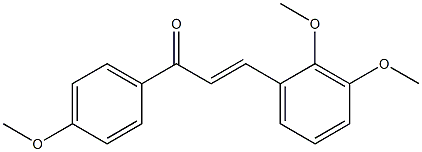
Description
L6H21 binds to MD-2 (myeloid differentiation protein-2, Kd=33.3 μM) and blocks its interaction with TLR4 (toll-like receptor 4) in LPS-stimulated cells, inhibiting TNFα and IL-6 production.1 Attenuates disease progression in a high-fat diet (HFD) induced NASH mouse model.2 Inhibits obesity-induced cardiomyopathy and fibrosis.3 Reduces ethanol plus LPS-induced liver injury via inhibition of NLRP3 inflammasome activation.4 Provides cardioprotective effects5 and protects against cognitive impairment and brain pathologies in HFD prediabetic rats6. Cell permeable. Active in vivo.
Uses
L6H21, a Chalcone (HY-121054) derivative, is an orally active, potent and specific myeloid differentiation 2 (MD-2) inhibitor. L6H21 directly binds to MD-2 protein with a high affinity and low KD value of 33.3μM, blocking the formation of the LPS-TLR4/MD-2 complex. L6H21 inhibits LPS-induced expression of TNF-α and IL-6 in RAW264.7 macrophages, with IC50 values of 6.58 and 8.59 μM, respectively. L6H21 can be used for alcoholic liver disease, metabolic disturbance and neuroinflammation research[1][2][3].
in vivo
L6H21 (10 mg/kg, Oral gavage, daily) effectively inhibits EtOH + LPS-induced hepatic fat accumulation, hepatic steatosis and liver injury[1].
L6H21 (0-40 mg/kg, Orally, daily for 4 weeks) attenuates metabolic disturbance, restores cognition and attenuates brain pathologies dose and time-dependently in HFD-fed rats, and shows neuroprotective effect in a model of prediabetes[2].
| Animal Model: | Male C57BL6 mice (8-10 weeks old, n = 36, 8 mice in each group, 25-30 g, with EtOH and LPS)[1] |
| Dosage: | 10 mg/kg |
| Administration: | Oral gavage, daily, before EtOH feeding |
| Result: | Decreased hepatic triglyceride (TG) concentration, markedly decreased serum alanine transaminase (ALT) and aspartate transaminase (AST) levels; Significantly decreased inflammation in liver tissue induced by EtOH + LPS. |
| Animal Model: | Male Wistar rats (6-7 weeks old, 250 g, a normal diet (ND) (n=8) or a high-fat diet (HFD) (n=104) for 16weeks)[2] |
| Dosage: | 0, 10, 20, and 40 mg/kg |
| Administration: | Orally, daily for 1, 2 or 4 weeks |
| Result: | Ameliorated brain mitochondrial dysfunction in HFD-fed rats at 2-week administration time point; improved brain mitochondrial function in a dose-dependent manner for 4 weeks. Reduced hippocampal apoptosis in prediabetes for 4 weeks. Attenuated the reduction of dendritic spine volume and density for 4 weeks. Preserved microglial morphology in a dose-dependent manner. |
References
[1] YI WANG. MD-2 as the target of a novel small molecule, L6H21, in the attenuation of LPS-induced inflammatory response and sepsis[J]. British Journal of Pharmacology, 2015, 172 17: 4391-4405. DOI:
10.1111/bph.13221[2] YALI ZHANG. Inhibition of MD2-dependent inflammation attenuates the progression of non-alcoholic fatty liver disease[J]. JOURNAL OF CELLULAR AND MOLECULAR MEDICINE, 2017, 22 2: 936-947. DOI:
10.1111/jcmm.13395[3] QILU FANG . Inhibition of myeloid differentiation factor-2 attenuates obesity-induced cardiomyopathy and fibrosis[J]. Biochimica et biophysica acta. Molecular basis of disease, 2018, 1864 1: Pages 252-262. DOI:
10.1016/j.bbadis.2017.09.026[4] XIAOXIA KONG. Chalcone Derivative L6H21 Reduces EtOH + LPS-Induced Liver Injury Through Inhibition of NLRP3 Inflammasome Activation[J]. Alcohol (Hanover, York County, Pa.), 2019, 43 8: 1662-1671. DOI:
10.1111/acer.14120[5] NATTICHA SUMNEANG . Inhibition of myeloid differentiation factor 2 attenuates cardiometabolic impairments via reducing cardiac mitochondrial dysfunction, inflammation, apoptosis and ferroptosis in prediabetic rats[J]. Biochimica et biophysica acta. Molecular basis of disease, 2022, 1868 2: Article 166301. DOI:
10.1016/j.bbadis.2021.166301[6] THURA TUN OO. L6H21 protects against cognitive impairment and brain pathologies via toll-like receptor 4–myeloid differentiation factor 2 signalling in prediabetic rats[J]. British Journal of Pharmacology, 2021, 179 6: 1220-1236. DOI:
10.1111/bph.15741