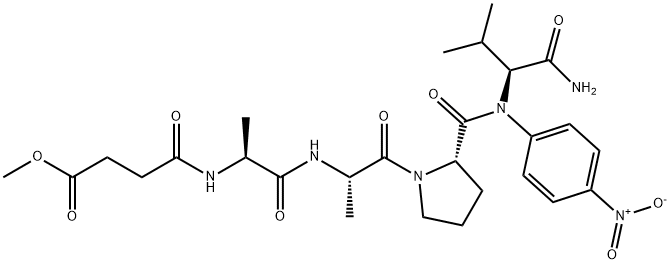
Description
Proteinase 3 (PR3, myeloblastin) is a polymorphonuclear leukocyte serine proteinase that degrades matrix proteins including fibronectin, laminin, vitronectin, and collagen type IV to generate antimicrobial peptides. Neutrophil elastase is a serine proteinase that is secreted by neutrophils during inflammation to destroy pathogens. Evaluating these enzymes is helpful to understanding inflammatory autoimmune processes. MeOSuc-AAPV-
pNA is a highly sensitive peptide substrate that is hydrolyzed by both human and mouse neutrophil elastase and PR3, but not cathepsin G or chymotrypsin. Enzyme activity can be quantified by colorimetric detection of free
p-nitroanilide at 405 nm.
Uses
N-Methoxysuccinyl-Ala-Ala-Pro-Val p-Nitroanilide is a highly sensitive peptide substrate that is hydrolyzed by both human and mouse neutrophil elastase and PR3 but not cathespin.
References
[1] OLAF WIESNER . Differences between human proteinase 3 and neutrophil elastase and their murine homologues are relevant for murine model experiments[J]. FEBS Letters, 2005, 579 24: Pages 5305-5312. DOI:
10.1016/j.febslet.2005.08.056[2] B. KORKMAZ. Discriminating between the Activities of Human Neutrophil Elastase and Proteinase 3 Using Serpin-derived Fluorogenic Substrates*[J]. The Journal of Biological Chemistry, 2002, 7 1: 39074-39081. DOI:
10.1074/jbc.m202918200
Sequene
MeOSuc-Ala-Ala-Pro-Val-pNA