Synthesis
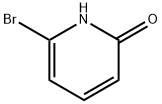
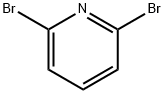
General procedure for the synthesis of 2-bromo-6-hydroxypyridine from 2,6-dibromopyridine: 2,6-dibromopyridine (4 g, 17 mmol), potassium tert-butoxide (20 g, 0.27 mol), and redistilled tert-butanol (100 mL) were mixed and reacted at reflux overnight. After completion of the reaction, the mixture was cooled and the solvent was removed under vacuum. Subsequently, the ice-water mixture was carefully added and the aqueous layer was extracted with chloroform (100 mL x 2) to remove unreacted starting material. Next, the aqueous layer was acidified with 3N hydrochloric acid and again extracted with chloroform (100 mL x 2). The organic phases were combined, washed with brine, dried over anhydrous sodium sulfate and concentrated to give pure 2-bromo-6-hydroxypyridine (2.5 g, 85% yield) as a white solid.
References
[1] Patent: US2009/318455, 2009, A1. Location in patent: Page/Page column 82
[2] Synlett, 2015, vol. 26, # 11, p. 1557 - 1562
[3] Patent: WO2014/57103, 2014, A1. Location in patent: Page/Page column 174
[4] Tetrahedron, 1996, vol. 52, # 35, p. 11385 - 11404
[5] Tian, Q., Shang, S., Wang, H., Shi, G., Li, Z., & Yuan, J. (2017). Halogen–Metal Exchange on Bromoheterocyclics with Substituents Containing an Acidic Proton via Formation of a Magnesium Intermediate. Molecules, 22(11), 1952.
https://doi.org/10.3390/molecules22111952 [6] Guo, D.-Y., Li, D.-W., Ning, M.-M., Dang, X.-Y., Zhang, L.-N., Zeng, L.-M., Hu, Y.-H., & Leng, Y. (2015). Yhhu4488, a novel GPR40 agonist, promotes GLP-1 secretion and exerts anti-diabetic effect in rodent models. Biochemical and Biophysical Research Communications, 466(4), 740–747.
https://doi.org/10.1016/j.bbrc.2015.09.130