Uses
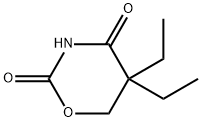
Dioxone is a substance possessing convulsant properties qualitatively similar to leptazol and bemegride. Dioxone is orally active[1].
Definition
ChEBI: Diethadione is an oxazinane.
Safety Profile
Poison by ingestion,
intravenous, intraperitoneal, subcutaneous,
and intramuscular routes. An analeptic (central nervous system stimulant). When heated to decomposition it emits toxic
fumes of NOx
in vivo
Dioxone (0-30 mg/kg; i.v., i.p., oral, s.c.; once) induces convulsant action[1].
| Animal Model: | CF-1 Mice and CF-Wistar rats[1] |
| Dosage: | 0-30 mg/kg |
| Administration: | Intraperitoneal injection, once |
| Result: | In mice: The spontaneous activity was often reduced, always accompanied by hyperreactivity at 10 mg/kg, tremors, clonic convulsion and motor incoordination phenomena occured after the administration of 30 mg/kg. In rats: Tremors and some isolated clonus of the muscles of the limbs were observed with 10 mg/kg, clonic convukions occurred with doses above 15 mg/kg. |
References
[1] G MAFFII, et al. A new analeptic: 5, 5-diethyl-1, 3-oxazine-2,4-dione (Dioxone). J Pharm Pharmacol. 1961 Apr;13:244-53. DOI:
10.1111/j.2042-7158.1961.tb11818.x