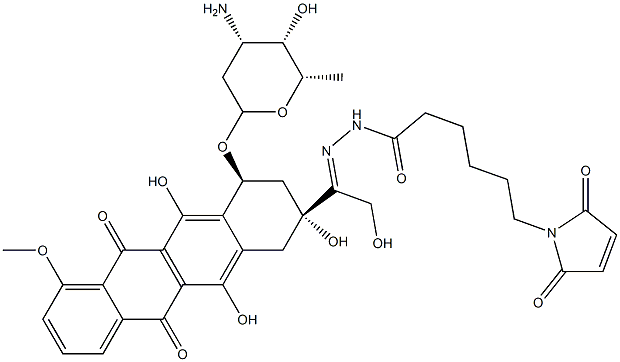
Uses
Aldoxorubicin (INNO-206) is an albumin-binding proagent of Doxorubicin (DNA topoisomerase II inhibitor), which is released from albumin under acidic conditions. Aldoxorubicin (INNO-206) has potent antitumor activities in various cancer cell lines and in murine tumor models.
Biological Activity
Aldoxorubicin (INNO-206) is an albumin-bound prodrug of doxorubicin, a DNA topoisomerase II inhibitor, released from albumin under acidic conditions. It has potent antitumor activity in various cancer cell lines and mouse tumor models.
in vitro
Aldoxorubicin (INNO-206) (0.27 to 2.16 μM) inhibits blood vessel formation and reduces multiple myeloma cell growth in a pH-dependent fashion.
in vivo
Aldoxorubicin (INNO-206) (10.8 mg/kg, i.v.) shows significantly smaller tumor volumes and IgG levels on days 28, and is well tolerated with 90% of mice surviving until the termination of the study in the mice bearing the LAGκ-1A tumor.
target
| Topoisomerase II | Daunorubicins/Doxorubicins |
IC 50
Topoisomerase II; Daunorubicins/Doxorubicins
References
[1] Eric Sanchez, et al. Anti-Myeloma Effects of the Novel Anthracycline Derivative INNO-206. Clin Cancer Res.2012 18; 3856.
[2] Kratz, F. INNO-206 (DOXO-EMCH), an Albumin-Binding Prodrug of Doxorubicin Under Development for Phase II Studies. Current Bioactive Compounds, 2011, 7(1): 33-38(6)
[3] Graeser R, et al. INNO-206, the (6-maleimidocaproyl hydrazone derivative of doxorubicin), shows superior antitumor efficacy compared to doxorubicin in different tumor xenograft models and in an orthotopic pancreas carcinoma model. Invest New Drugs. 2010 F DOI:
10.1007/s10637-008-9208-2[4] Walker L, et al. Cell penetrating peptides fused to a thermally targeted biopolymer drug carrier improve the delivery and antitumor efficacy of an acid-sensitive doxorubicin derivative. Int J Pharm. 2012 Oct 15;436(1-2):825-32. DOI:
10.1016/j.ijpharm.2012.07.043