Synthesis
At room temperature, 2,6-dimethylphenylboronic acid (150 mg), KOMe (2.0 equivalent), and catalyst [(IPr)CuCl] (14.4 mg, 3.0 mol%) were stirred for 5-10 minutes under a nitrogen atmosphere. The reaction tube was filled with carbon dioxide by applying vacuum and CO2 purging for 4-5 cycles. The reaction tube was sealed, and the reaction was stirred at 70°C for 24 hours. The reaction mixture was then carefully quenched by adding 2.0 M hydrochloric acid aqueous solution. The reaction mixture was diluted with water, extracted three times with ethyl acetate, and the combined organic phases were washed with brine. The organic phases were dried on anhydrous sodium sulfate, filtered, and the solvent was removed under reduced pressure. The product was then separated and purified by silica gel column chromatography to obtain the target product molecule, 2,6-dimethylbenzoic acid.

Figure 2,6-Dimethylbenzoic Acid Synthetic Route
Chemical Properties
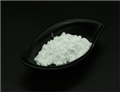
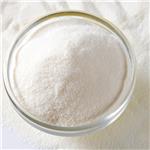
white to pale cream crystalline powder
Uses
Benzoic acid derivative used in the preparation of antiinflammatory and antirheumatic agents. A potential geothermal tracer.
Uses
2,6-Dimethylbenzoic acid is a benzoic acid derivative used in the preparation of antiinflammatory and antirheumatic agents. And it is also a potential geothermal tracer.
Definition
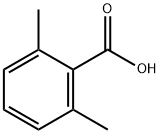
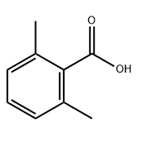
ChEBI: A dimethylbenzoic acid in which the two methyl groups are located at positions 2 and 6.
General Description
Crystal structure of 2,6-dimethylbenzoic acid was studied by three-dimensional X-ray methods.
Purification Methods
Steam distil the acid, and crystallise it from EtOH or H2O (m 116.3-116.7o). The N-dimethylamide has m 62-63o (from Et2O). [Beilstein 9 H 531, 9 IV 1798.]