Uses
Dehydroepiandrosterone sulfate, a neuroactive neurosteroid, plays a major role in brain development and aging by influencing the migration of neurons, arborization of dendrites, and formation of new synapses[1][2][3].
Definition
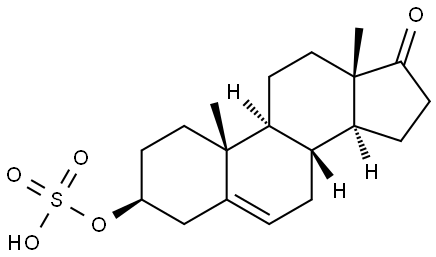
ChEBI: A steroid sulfate that is the 3-sulfooxy derivative of dehydroepiandrosterone.
in vivo
DHEAS chronic administration produces a dose-dependent effect on performance[3].
| Animal Model: | Sixty-four male Sprague-Dawley rats, approximately 90 days of age (300-400 g)[3]. |
| Dosage: | 5, 10, or 20 mg/kg. |
| Administration: | Subcutaneous injection starting 7 days post-surgery and 1 h prior to all behavioral testing. |
| Result: | Significantly effective in improving latency to reach the platform as compared to injured rats receiving vehicle. |
IC 50
Human Endogenous Metabolite
References
[1] E E Baulieu, et al. Dehydroepiandrosterone (DHEA) and dehydroepiandrosterone sulfate (DHEAS) as neuroactive neurosteroids. Proc Natl Acad Sci U S A. 1998 Apr 14;95(8):4089-91. DOI:
10.1073/pnas.95.8.4089[2] C R Parker Jr, et al. Dehydroepiandrosterone and dehydroepiandrosterone sulfate production in the human adrenal during development and aging. Steroids. 1999 Sep;64(9):640-7. DOI:
10.1016/s0039-128x(99)00046-x[3] Stuart W Hoffman, et al. The delayed administration of dehydroepiandrosterone sulfate improves recovery of function after traumatic brain injury in rats. J Neurotrauma. 2003 Sep;20(9):859-70. DOI:
10.1089/089771503322385791