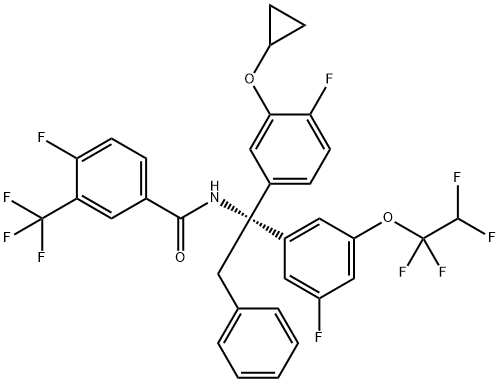
BMS-795311 (1-3 mg/kg; oral administration) inhibits plasma CE transfer activity in human CETP (hCETP)/apoB-100 dual transgenic (Tg) mice[1].
BMS-795311 (3-10 mg/kg; p.o. for 3 days) increases high density lipoprotein-cholesterol (HDL-C) content[1].
BMS-795311 (8 mg/kg, i.v.) has no e?ect on mean, systolic, or diastolic blood pressure, heart rate, or locomotor activity in rat telemetry studies[1].
BMS-795311 exhibits reasonable oral bioavailability (mice 37%, rats 37%, monkeys 20%, dogs 5%) and Cmax (mice 5.3, rats 17, monkeys 1.7, dogs 0.43 ng/mL) following oral administration (mice 10, rats 10, monkeys 5, dogs 5 mg/kg)[1].
BMS-795311 exhibits terminal elimination half-lives (mice 6, rats 7, monkeys >18, dogs 10 h) due to low plasma clearance (2.0, 0.9, 0.9, and 1.4 mL/min/kg respectively) combined with little volumes of distribution (0.8, 0.4, 0.9, and 0.6 L/kg respectively) following intravenous administration (mice 5, rats 1, monkeys 4, dogs 1 mg/kg)[1].
| Animal Model: | hCETP/apoB-100 dual Tg mice[1] |
| Dosage: | ?1, 3 mg/kg |
| Administration: | Oral administration |
| Result: | Inhibited CETP activity at a dose of 1 mg/kg at the 8 h time point. |
| Animal Model: | Moderately fat-fed hamsters[1] |
| Dosage: | 3, 10 mg/kg |
| Administration: | Oral administration for 3 days |
| Result: | Increased plasma high density lipoprotein-cholesterol (HDL-C) content by 45% when dosed at 10 mg/kg. |