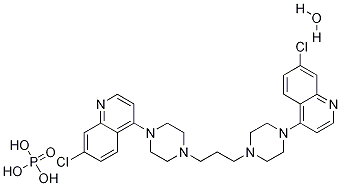
Piperaquine (10-90 mg/kg; a single i.p.) decreases parasitemia at all of the doses tested in mice[1].
Piperaquine (90 mg/kg; a single i.p.) exhibits the t1/2, apparent clearance, and apparent volume of distribution 17.8 days, 33.5 mg h/L, 1.55 L/h/kg, and 956 L/kg, respectively, in healthy mice and 16.1 days, 27.3 mg h/L, 1.9 L/h/kg, and 1,059 L/kg in malaria-infected mice[1].
| Animal Model: | Male BALB/c mice (7 to 8 weeks) are inoculated with Plasmodium berghei parasites[1] |
| Dosage: | 0, 10, 30, 90 mg/kg |
| Administration: | A single i.p. administration |
| Result: | The median survival time was 10 days at dose of 10 mg/kg.
The median survival time was 54 days at dose of 30 mg/kg.
All mice were active and alert and had stable body weights throughout the course of the study at dose of 90 mg/kg.
|
| Animal Model: | Male Swiss mice (6 weeks old)[1] |
| Dosage: | 90 mg/kg (Pharmacokinetic Analysis) |
| Administration: | A single i.p. administration |
| Result: | t1/2=17.8 d; AUC=33.5 mg?h/L; apparent clearance=1.55 L/h/kg; apparent volume of distribution=956 L/kg. |