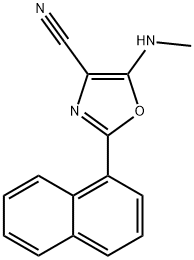
Description
Lipoxygenases (LOs) are non-heme iron-containing dioxygenases that catalyze the oxidation of polyunsaturated fatty acids to generate unsaturated fatty acid hydroperoxides. The immediate products of 15-LO fatty acid oxidation act as mediators in inflammation, thrombosis, and cancer. ML351 is an inhibitor of human reticulocyte 15-LO-1 (IC50 = 200 nM) with >250-fold selectivity over the related enzymes 5-LO, platelet 12-LO, 15-LO-2, ovine COX-1, and human COX-2. ML351 was shown to be protective against oxidative glutamate toxicity in mouse neuronal HT-22 cells and significantly reduced infarct size in an in vivo mouse model for ischemic stroke.
Uses
ML351 is a selective 12/15 LOX inhibitor (IC50 = 200 nM). Exhibits >250-fold selectivity over related isozymes, 5-LOX, platelet 12-LOX, 15-LOX-2, ovine COX-1, and human COX-2. Protects against oxidative glutamate toxicity in mouse neuronal cells (HT-22) and reduces infarct size in a mouse ischemic stroke model.
Biochem/physiol Actions
ML351 is a cell penetrant, selective and highly potent human lipoxygenase-12/15 (15-Lipoxygenase-1, 12/15-LOX) inhibitor that exhibits protective effects against oxidative glutamate toxicity in mouse neuronal HT22 cells. ML351 reduces infarct size in a mouse model of ischemic stroke.
in vivo
ML351 (0-48 mg/kg; before the beginning of the STZ series and concluding 5 days after the last dose of STZ) protects against diabetes development in an STZ β-cell injury model. ML351 at 24 mg/kg (M24)+ STZ shows significantly less weight reduction compares with control group. M24 shows almost complete protection from hyperglycemia. But M48 and M0 exhibits frank hyperglycemia by day 9 of the study and significantly impaired GTTs[2].ML351 (intraperitoneal injection; 0-24 mg/kg; daily for 2 weeks) leads to improved glycemic control and significantly reduced insulitis. The reduction of β-cell death in NOD mice has been suggested to lead to reductions in insulitis, likely by mitigating the chemotactic signals released by dying β-cells. NOD + M24 animals exhibited improved glycemic control compared with NOD + M0 animals[2].
| Animal Model: | Nine-week-old male C57BL/6J mice[2] |
| Dosage: | 0 mg/kg; 24 mg/kg; 48 mg/kg; |
| Administration: | Intraperitoneal injection before the beginning of the STZ series and concluding 5 days after the last dose of STZ |
| Result: | Protected against diabetes development in an STZ β-cell injury model that mimics the inflammation seen in T1D. |
| Animal Model: | Female NOD mice develop spontaneous autoimmune diabetes between 12 and 24 weeks of age[2] |
| Dosage: | 0 mg/kg; 24 mg/kg; 48 mg/kg; |
| Administration: | Intraperitoneal injection before the beginning of the STZ series and concluding 5 days after the last dose of STZ |
| Result: | Protected Against Early Glycemic Deterioration in NOD Mice. |
References
[1]. rai g, joshi n, perry s, et al. discovery of ml351, a potent and selective inhibitor of human 15-lipoxygenase-1. probe reports from the nih molecular libraries program [internet]. bethesda (md): national center for biotechnology information (us); 2010-2013 apr 15 [updated 2014 jan 13].
[2]. rai g, joshi n, jung je, et al. potent and selective inhibitors of human reticulocyte 12/15-lipoxygenase as anti-stroke therapies. j med chem. 2014 may 22;57(10):4035-48.
[3]. gaffney bj. lipoxygenases: structural principles and spectroscopy. annu rev biophys biomol struct. 1996;25:431-59.