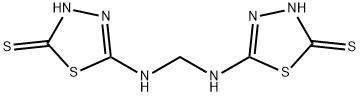
Description
Bismerthizol is a bactericide used to control bacterial blight by inhibiting growth. Very little information has been published regarding its environmental fate, ecotoxicology or impact on human health.
Chemical Properties
Pure product is white rectangular columnar or light yellow loose powder, mp189~191℃ (industrial product mp172~174℃), decomposition temperature 200℃, easily soluble in dimethylformamide, pyridine, dimethyl sulfoxide, etc. Soluble in methanol, ethanol, acetone, insoluble in benzene, chloroform and water.
Uses
Bismerthiazol is a high-efficiency, low-toxicity, and low-residue fungicide for the control of bacterial blight in early, middle and late rice seedlings and Honda.
Mechanism of action
Inhibits bacterial growth, inducing resitance and showing both protective and curactive activity.
Synthesis
Bismerthiazol can be prepared by the methods:Put 180kg of hydrazine sulfate, a small amount of catalyst, and 165kg of ammonium thiocyanate into the reactor, heat to reflux, cool, filter, wash with water, and suction filter to obtain dithiourea.