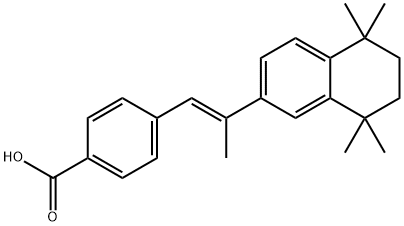
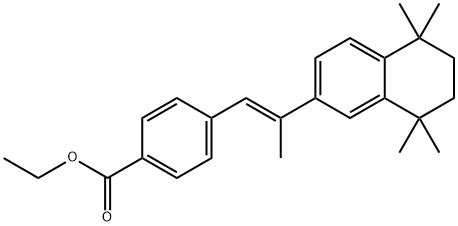
In a 10 mL single neck flask, 3 mL of dichloromethane, 558 mg of ethyl (E)-4-(2-(5,5,8,8-tetramethyl-5,6,7,8-tetrahydronaphthalen-2-yl)prop-1-en-1-yl)benzoate, 267 mg of p-ethoxycarbonylbenzaldehyde, and 16 mg of tetrabutylammonium bromide were added, and mixed by stirring. An aqueous solution of 200 mg sodium hydroxide and 400 mg sodium hydroxide was then added and heated to reflux. After 1 hour of reaction, the reaction progress was monitored by HPLC until the peak area ratio of ethyl (E)-4-(2-(5,5,8,8-tetramethyl-5,6,7,8-tetrahydronaphthalen-2-yl)prop-1-en-1-yl)benzoate, the intermediate (E)-4-(2-(5,5,8,8-tetramethyl-5,6,7,8-tetrahydronaphthalen-2-yl)prop-1-en-1-yl)benzoate was less than 5% and the reaction was stopped. The solvent was removed by evaporation under reduced pressure and 2 mL of ethanol, 250 mg of sodium hydroxide and 4 mL of water were added to the residue and heated to reflux with stirring. The reaction was continued for 1 hour and monitored by HPLC until the raw material (E)-ethyl 4-(2-(5,5,8,8-tetramethyl-5,6,7,8-tetrahydronaphthalen-2-yl)prop-1-en-1-yl)benzoate was completely consumed. After completion of the reaction, the reaction solution was cooled to 40°C with ice water, poured into 5 mL of water and the pH was adjusted to 2-6 with 0.5 N dilute sulfuric acid to precipitate a solid. The organic layer was separated by adding 20 ml of dichloromethane under stirring and washed sequentially with 2 x 10 ml of dichloromethane and 2 x 20 ml of deionized water. The organic layer was dried with 2 g of anhydrous magnesium sulfate, filtered and concentrated under reduced pressure. Cooling to -10 °C induced precipitation of a white solid, the filter cake was washed with 0.5 mL of ethanol and dried under reduced pressure at 50 °C to afford the target product (E)-4-(2-(5,5,8,8-tetramethyl-5,6,7,8-tetrahydronaphthalen-2-yl)prop-1-en-1-yl)benzoic acid (279 mg, 80.1% yield, 99.1% HPLC purity, MS (MH+): 347.2).