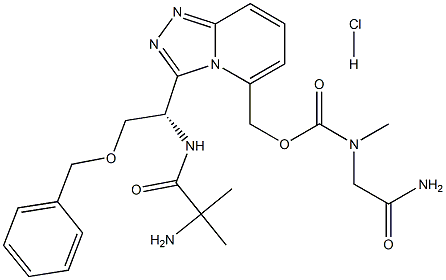
BMS-604992 (500 μg/kg; i.p.; 5 minutes) results in a significant increase in gastric emptying compared with vehicle-treated mice[1].
BMS-604992 (1~1000 mg/kg; p.o.; 1 hour) Shows a dose-linear increase in plasma concentrations at the 1 hour time point and elicits a dose-responsive increase in food intake relative to vehicle-treated controls, with a minimum effective dose of approximately 10 mg/kg[1].
BMS-604992 (300 mg/kg; p.o.; 5~20 minutes) produces a significant difference at the 5 minutes time point.[1].
BMS-604992 (500 μg/kg; i.p.; 4 hours) increases food intake approximately 2-fold compared with vehicle-treated controls[1].
| Animal Model: | C57BL/6 mice |
| Dosage: | 500 μg/kg |
| Administration: | I.p.; 5 minutes |
| Result: | Resulted in a significant increase in gastric emptying compared with vehicle-treated mice.
|
| Animal Model: | C57BL/6 mice |
| Dosage: | 1~1000 mg/kg |
| Administration: | P.o.; 1 hour |
| Result: | Showed a dose-linear increase in plasma concentrations at the 1 hour time point and elicited a dose-responsive increase in food intake relative to vehicle-treated controls, with a minimum effective dose of approximately 10 mg/kg.
|
| Animal Model: | SD rat |
| Dosage: | 300 mg/kg |
| Administration: | P.o.; 5~20 minutes |
| Result: | Observed a significant difference at the 5 minutes time point.
|
| Animal Model: | Male GhrR KO and WT mice |
| Dosage: | 500 μg/kg |
| Administration: | I.p.; 4 hours |
| Result: | Increased food intake approximately 2-fold compared with vehicle-treated controls.
|