Uses
antiemetic, antipsychotic, treatment of vertigo
Definition
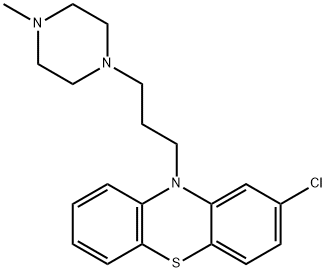
ChEBI: A member of the class of phenothiazines that is 10H-phenothiazine having a chloro substituent at the 2-position and a 3-(4-methylpiperazin-1-yl)propyl group at the N-10 position.
Brand name
Compazine (GlaxoSmithKline).
Clinical Use
Nausea and vomiting
Labyrinthine disorders
Psychoses
Severe anxiety
Veterinary Drugs and Treatments
Prochlorperazine as a single agent is used in dogs and cats as an antiemetic.
The only approved products for animals are combination
products containing prochlorperazine, isopropamide, with or without
neomycin (Darbazine?, Neo-Darbazine?—SKB Labs) which
are no longer marketed in the USA. The approved indications for
these products include: vomiting, non-specific gastroenteritis, drug
induced diarrhea, infectious diarrhea, spastic colitis, and motion
sickness in dogs and cats (injectable product only).
Drug interactions
Potentially hazardous interactions with other drugs
Anaesthetics: enhanced hypotensive effect.
Analgesics: increased risk of convulsions with
tramadol; enhanced hypotensive and sedative
effects with opioids; increased risk of ventricular
arrhythmias with methadone.
Anti-arrhythmics increased risk of ventricular
arrhythmias with anti-arrhythmics that prolong
the QT interval, e.g. procainamide, disopyramide,
dronedarone and amiodarone - avoid with
amiodarone and dronedarone.
Antibacterials: increased risk of ventricular
arrhythmias with delamanid and moxifloxacin -
avoid.
Antidepressants: increase concentrations and
additive antimuscarinic effects, notably with
tricyclics; increased risk of ventricular arrhythmias
with citalopram and escitalopram - avoid; increased
risk of convulsions with vortioxetine.
Antiepileptics: antagonised (convulsive threshold
lowered).
Antimalarials: avoid with artemether/lumefantrine
and piperaquine with artenimol.
Antipsychotics: increased risk of ventricular
arrhythmias with droperidol and pimozide - avoid;
increased risk of ventricular arrhythmias with
risperidone.
Antivirals: concentration possibly increased with
ritonavir; increased risk of ventricular arrhythmias
with saquinavir - avoid.
Anxiolytics and hypnotics: increased sedative effects.
Atomoxetine: increased risk of ventricular
arrhythmias.
Beta-blockers: enhanced hypotensive effect;
increased risk of ventricular arrhythmias with sotalol.
Cytotoxics: increased risk of ventricular arrhythmias
with arsenic trioxide.
Desferrioxamine: avoid concomitant use.
Diuretics: enhanced hypotensive effect.
Lithium: increased risk of extrapyramidal side effects
and possibly neurotoxicity.
Pentamidine: increased risk of ventricular
arrhythmias.
Metabolism
Prochlorperazine undergoes extensive first pass
metabolism in the gut wall. It is also extensively
metabolised in the liver and is excreted in the urine and
bile. The metabolites are inactive.