Synthesis
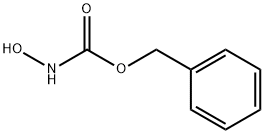
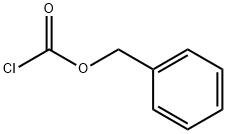
The general procedure for the synthesis of N-(benzylcarbonyloxy)hydroxylamine from benzyl chloroformate was as follows: 92.9 g (0.876 mol) of sodium carbonate (Na2CO3) and 300 mL of pure water were added to a 1 L three-necked flask, and the sodium carbonate was completely dissolved by mechanical stirring. Subsequently, 46.83 g (0.674 mol) of hydroxylamine hydrochloride was added, and 220 mL of dichloromethane solution containing 100 g (0.587 mol) of benzyl chloroformate was stirred and slowly added dropwise at room temperature for about 4 hours. After the dropwise addition, stirring was continued at room temperature for 1 h. Then 300 mL of pure water was added to separate the organic and aqueous layers. The aqueous layer was extracted with dichloromethane (150 mL each time, 3 times in total), and all the dichloromethane phases were combined, washed with 300 mL of saturated saline, and then dried with 20.0 g of anhydrous sodium sulfate. The dried solution was distilled under reduced pressure at 45 °C to remove the solvent to give the crude product I. The crude product was dissolved in 100 mL of dichloromethane, ensuring complete dissolution, then cooled to 0 °C in an ice-water bath and 300 mL of petroleum ether was added slowly and dropwise. The solution was crystallized at 0 °C for 1 h. The crystalline product was washed with pre-cooled mixed solvent (200 mL, petroleum ether: dichloromethane = 3:1, v/v) and dried at 35 °C under reduced pressure. Finally, it was stirred at 0 °C for 5 h to give 63.0 g of white powdery solid in 64% overall yield.
References
[1] Organic and Biomolecular Chemistry, 2009, vol. 7, # 21, p. 4531 - 4538
[2] Journal of Organic Chemistry, 2009, vol. 74, # 22, p. 8690 - 8694
[3] Journal of the American Chemical Society, 2010, vol. 132, # 37, p. 12862 - 12864
[4] Synthetic Communications, 2010, vol. 40, # 5, p. 642 - 646
[5] Helvetica Chimica Acta, 1991, vol. 74, # 8, p. 1653 - 1670