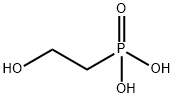
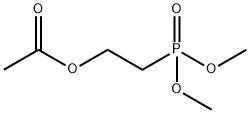
The general procedure for the synthesis of (2-hydroxyethyl)phosphonic acid from ethyl 2-(dimethoxyphosphono)acetate was as follows: to a 500 mL four-necked round-bottomed flask equipped with a heating jacket, thermocouples, a 10-pallet old Shore column and distillation head, were added sequentially dimethyl-2-(acetoxy)ethyl phosphonate (293 g, 1.5 mol), AMBERLYST-15 ion exchange resin (48 g) and water (72 g, 4 mol). The reaction mixture was heated to 100 °C. After 15 hours of reaction, the reaction temperature was raised to 105°C. During this process, the vapor temperature frequently reached 95 °C and the distillate was mainly water. Subsequently, about 150 g of additional water was added to the reaction system and the volatile components were removed under vacuum, resulting in 168 g (89% yield) of hydroxyethylphosphonic acid. The method avoids the use of stoichiometric HCl, thereby reducing the generation of corrosive and carcinogenic by-products (e.g., hydrochloric acid and methyl chloride), which are mainly methanol and methyl acetate, as compared to conventional methods. In addition, the method offers the advantage of easy recovery and reuse of the ion exchange resin.