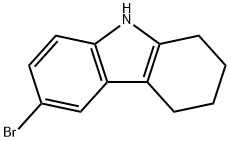
Step 2. Synthesis of 6-bromo-2,3,4,9-tetrahydro-1H-carbazole: In a 250 mL round bottom flask, 1-(4-bromophenyl)-2-cyclohexylhydrazine (11 g, 41.35 mmol, 1.00 eq.) and concentrated hydrochloric acid (150 mL) were added. The reaction mixture was placed in an oil bath and heated to 60 °C for 4 hours. The progress of the reaction was monitored by thin layer chromatography (TLC) with the unfolding agent ratio of ethyl acetate:petroleum ether = 1:1. After completion of the reaction, the mixture was cooled to room temperature. The pH was adjusted with aqueous sodium hydroxide to 8. Subsequently, the mixture was extracted with ethyl acetate (5 x 100 mL). The organic layers were combined, dried with anhydrous sodium sulfate, filtered and concentrated on a rotary evaporator. The residue was purified by silica gel column chromatography with ethyl acetate/petroleum ether (1/10) as eluent to afford 3-bromo-6,7,8,9-tetrahydro-5H-carbazole as a yellow solid (10 g, 97% yield).