Definition
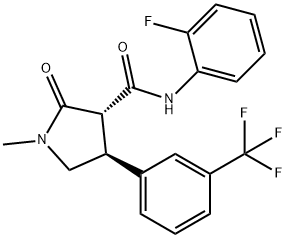
ChEBI: Tetflupyrolimet is an N-alkylpyrrolidine that is pyrrolidine substituted by methyl, oxo, (2-fluorophenyl)aminocarbonyl, and 3-(trifluoromethyl)phenyl groups at positions 1, 2, 3, and 4, respectively. It is a herbicide developed by FMC Corporation for the control of grass weeds in rice, as well as key broadleaf weeds and sedges. It has a role as a herbicide, a pyrimidine synthesis inhibitor and an EC 1.3.5.2 [dihydroorotate dehydrogenase (quinone)] inhibitor. It is an anilide, a member of monofluorobenzenes, a secondary carboxamide, a member of (trifluoromethyl)benzenes, a N-alkylpyrrolidine and a pyrrolidinecarboxamide.
Production Methods
Tetflupyrolimet is produced through a contemporary, multi-fragment assembly typical of next-generation HPPD-inhibiting herbicides. Commercial routes begin by constructing the substituted pyrazole core, usually via condensation of a beta-dicarbonyl precursor with hydrazine derivatives, under conditions that tightly control ring formation and prevent over-reaction of the sensitive heterocycle. In parallel, manufacturers prepare the heavily fluorinated aromatic fragment, introducing its difluoromethyl and chloro substituents through established halogenation and nucleophilic-substitution chemistry chosen to preserve the integrity of the aromatic ring. These advanced intermediates are then joined through a selective coupling step, often an amide forming or heteroaryl-aryl bond forming reaction, to assemble the full tetflupyrolimet scaffold without degrading the fluorinated moieties.