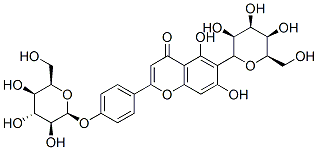
[1] Masashi Nagai, et al. The effect of isosaponarin isolated from wasabi leaf on collagen synthesis in human fibroblasts and its underlying mechanism. J Nat Med. 2010 Jul;64(3):305-12. DOI:
10.1007/s11418-010-0412-y[2] Lu CW, et al. The Effect of Isosaponarin Derived from Wasabi Leaves on Glutamate Release in Rat Synaptosomes and Its Underlying Mechanism. Int J Mol Sci. 2022 Aug 6;23(15):8752. DOI:
10.3390/ijms23158752[3] Kaynat Firdos et al. Harnessing isosaponarin: A multifaceted bioactive and therapeutic potential compound from nature. Biol. Biomed. J. (2025) Vol. 3, Issue (2) Pages 1-12.
[4] Chi Z, et al. P4HA2 promotes proliferation, invasion, and metastasis through regulation of the PI3K/AKT signaling pathway in oral squamous cell carcinoma. Sci Rep. 2024 Jul 1;14(1):15023. DOI:
10.1038/s41598-024-64264-5[5] Hashimoto, et al. Dietary Isosaponarin is Intestinally Metabolized to Isovitexin, Most of Which are Excreted in Feces without Being Absorbed. Asian Journal of Food Research and Nutrition,2(3):104-116.