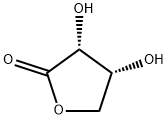
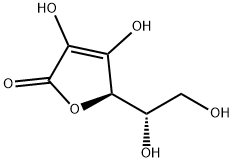
Isoascorbic acid (17.6 g, 0.1 mol) was used as the raw material, which was dissolved in 250 mL of water and the solution was cooled to 0-6 °C. Anhydrous sodium carbonate powder (21.2 g, 0.2 mol) was added to the reaction flask in batches under stirring conditions. After the addition was completed, 30% hydrogen peroxide solution (22 mL) was added slowly and the internal temperature was increased from 6°C to 19°C during the reaction. Subsequently, the reaction mixture was placed in an ice bath and stirring was continued for 5 min, at which time the internal temperature increased to 27 °C. The reaction solution was heated to 42 °C and maintained at this temperature with stirring for 30 minutes. Zinc powder (1.0 g, 0.015 mol) was added to the reaction mixture and the reaction was subsequently quenched with excess hydrogen peroxide until the potassium iodide starch test paper was negative. The pH of the reaction solution was adjusted to 1.0 with 6 N hydrochloric acid. the reaction solution was concentrated to a small volume under reduced pressure at 50 °C to precipitate a white solid. Extraction was carried out with ethyl acetate (150 mL x 3), the organic phases were combined and concentrated to 200 mL (10-15 v/v). The concentrate was cooled to 15-25 °C and stirred for 5 to 8 hours to induce the precipitation of a large amount of white solid. Finally, after filtration and drying, 8.26 g (3R,4R)-3,4-dihydroxydihydrofuran-2(3H)-one was obtained in 70% yield.