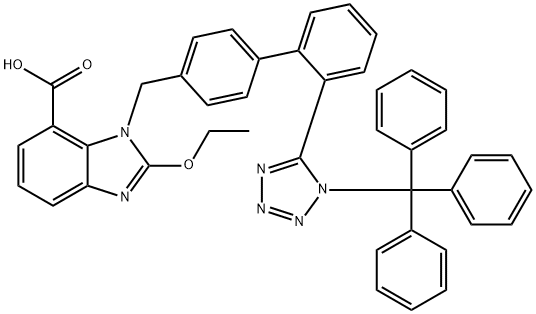
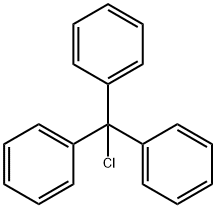
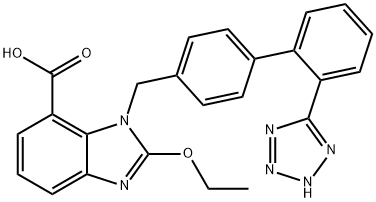
I. 1-((2'-(2H-tetrazol-5-yl)-[1,1'-biphenyl]-4-yl)methyl)-2-ethoxy-1H-benzo[d]imidazole-7-carboxylic acid (10 kg) was added to the reaction kettle along with dichloromethane (100 kg), and cooled down to 15°C. The temperature of the reaction system was increased to 15°C by adding triethylamine (4.5 kg). Triethylamine (4.5 kg) was slowly added dropwise, and after the dropwise addition was completed, the temperature of the reaction system was raised to 23 °C. Triphenylchloromethane (7kg) was added in batches and after completion of addition, the reaction was maintained at 23°C for 3.5 hours. The reaction progress was monitored by TLC (unfolding agent: dichloromethane/methanol=10:1, v/v, Rf=0.78). After completion of the reaction, the pH of the system was adjusted to 5.4 by adding 0.1 mol/L HCl (30 L), then 5 L of 9 mol/L HCl was added slowly to pH=2.2, and the reaction was allowed to stand for stratification to separate the aqueous and organic layers. The organic layer (about 60 L) was washed with saturated saline, transferred to a reduced pressure distillation unit, and dichloromethane was recovered under reduced pressure. Ethanol (65L) was added to the residue, warmed to 45°C and stirred for 3 hours until a large amount of white solid precipitated. The heating was stopped, cooled to room temperature, filtered, the filter cake was washed with a small amount of ethanol, and dried at 50°C under normal pressure for 12 hours to obtain 2-ethoxy-1-((2'-(1-trityl-1H-tetrazol-5-yl)-[1,1'-biphenyl]-4-yl)methyl)-1H-benzo[d]imidazole-7-carboxylic acid (white crystalline powder, 14.5 kg, yield 94.0%).