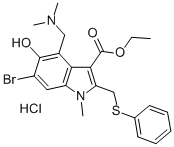
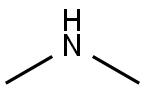
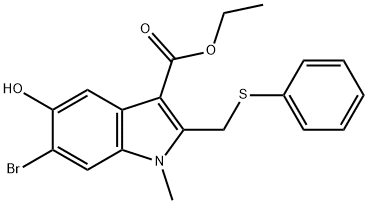
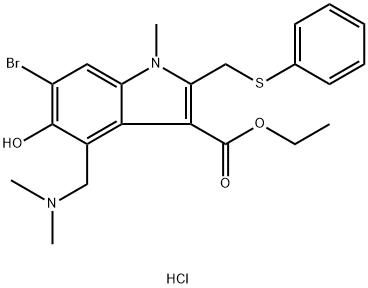
The reaction flask was placed in an ice-water bath and 19.4 g (0.2 mol) of sulfamic acid, 40.5 mg (0.3 mol) of 30% dimethylamine aqueous solution and 22.5 g (0.3 mol) of 37% formaldehyde aqueous solution were added sequentially. After a slow dropwise addition of 1000 mL of water, ethyl 6-bromo-5-hydroxy-1-methyl-2-(phenylthiomethyl)indole-3-carboxylate (84.0 g, 0.2 mol) was added in batches. The reaction mixture was stirred at 30 °C and maintained at 40 °C for 3 hours. Upon completion of the reaction, the mixture was poured into an appropriate amount of ice water, the pH was adjusted to above 13 with 20% sodium hydroxide solution, cooled in an ice bath, the solid was collected by filtration, and washed to neutrality with distilled water. The pure product was obtained by recrystallization through mixed solvent of petroleum ether/ethyl acetate. The above pure product was dissolved in acetone, and the reaction temperature was controlled at 60°C. Concentrated hydrochloric acid was slowly added dropwise to pH 1.0, and the dropwise process lasted for 30 minutes. After completion of the dropwise addition, the reaction was continued for 2-3 hours, followed by cooling and standing. The resulting white product was added to 800 mL of 95% ethanol and stirred with water (350 mL) at 25-30 °C for 1-2 h. After standing, the product was filtered and dried to give 91.3 g of white product (1), an off-white solid of abidol hydrochloride monohydrate in 85.6% yield. The synthesized product was confirmed to be structurally consistent with the target product by nuclear magnetic resonance (NMR) analysis, and the purity was 99.7% by high performance liquid chromatography (HPLC).