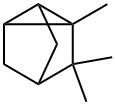
Tricyclene: Source and Biosynthesis Optimization
Tricyclene is a monocyclic tricyclic hydrocarbon with a faint pine-like aroma. This compound occurs naturally in the essential oils of various plants and can also be prepared by acid-catalysed isomerisation of α-pinene. Its intramolecularly strained ring structure confers a certain degree of reactivity, enabling it to undergo reactions such as addition and ring-opening. It is commonly used as a fragrance component in the formulation of perfumes, whilst also serving as an organic synthesis intermediate for the preparation of other terpenoid derivatives.

The Biosynthesis of the Monoterpene Tricyclene
Monoterpenes are a class of C10 terpenoid compounds and are widely used in the pharmaceutical, cosmetic, and fuel industries. Tricyclene, a tricyclic monoterpene, is a valuable product that naturally occurs in the essential oils of a number of plant species, such as Salvia aegyptiaca, Polyalthia suberosa, and Elettaria cardamomum. It was reported that plant essential oils rich in tricyclene have antioxidant, antitumor, and antimicrobial properties. Traditionally, monoterpenes have been derived from plant biomass; however, this conventional extraction method is laborious and inefficient, necessitating the significant consumption of natural resources. Therefore, the achievement of large-scale commercial production has not yet been realized. Similarly, the chemical synthesis strategy for monoterpenes was considered as a means to enhance productivity; however, it is accompanied by drawbacks such as intricate reactions, exorbitant costs, and significant environmental pollution. The biosynthesis pathways of IPP and DMAPP include the methylerythritol-4-phosphate (MEP) and the mevalonate (MVA) pathways. The MEP pathway is generally found in bacteria such as E. coli, while the MVA pathway is generally found in eukaryotes such as Saccharomyces cerevisiae. Martin et al. successfully constructed the heterologous MVA pathway in E. coli for the first time and obtained a high-yield strain of amorphadiene, which can be used as a platform host for the production of general terpenoids. Afterward, due to the regulatory mechanisms of the native host limiting the expression of the MEP pathway, the heterologous expression of the MVA pathway in E. coli to synthesize monoterpenes, such as α- Pinene, limonene, sabinene, and γ-terpinene, was reported. Similar to other monoterpenes, GPPS catalyzed the conversion of IPP and DMAPP into geranyl diphosphate (GPP), which subsequently underwent transformation by TS to yield tricyclene.[1]
This study reported the introduction of TS 1411 to construct a two-plasmid system to modulate the MVA pathway and achieve tricyclene biosynthesis in E. coli. By optimizing the culture temperature, increasing the copy number of the TS-coding gene, and truncating the random coil sequences at the N-terminal of TSs, we achieved a remarkable 794.5-fold improvement in the tricyclene titer compared to its wild type, with an increase from 0.060 mg/L to 47.671 mg/L. The results of SDS-PAGE analysis revealed that the solubility of TS was significantly enhanced by reducing the induction temperature and truncating the TSs, indicating a close relationship between tricyclene titer and TS solubility. Furthermore, varying degrees of increases in tricyclene titers were observed upon truncation of other TSs. To the best of our knowledge, this report presents the highest recorded titer of tricyclene and specificity of tricyclene synthase to date.
A new chemotype with high tricyclene content
Lamiaceae (Labiatae) is one of the most important botanical families, constituted by 240 genera and 6970 species (Meyer et al. 2004). Belonging to this family, is the genus Salvia, tribe Mentheae, that represented by 900 species spread throughout the world (Tenore et al.
2010). Nevertheless, this genus is scarce in the Sahara, with only three species: S. chudaei, S. aegyptiaca and S. verbenaca. The essential oil obtained by hydrodistillation from the aerial parts of Salvia aegyptiaca L. (Lamiaceae) growing wild in pre-Saharan region of Algeria, was analysed by GC-MS. Forty-one compounds were detected, representing 87.9% of the whole oil. The essential oil of S. aegyptiaca is characterized by the predominance of monoterpene derivatives (70.6%). The major constituents were tricyclene (22.9%), followed by limonene (17.5%), β-pinene (7.4%), caryophyllene oxide (3.2%) and β-caryophyllene (3.1%). Tricyclene, the main component in our analysis is generally absent in the volatile oils from other Salvia species, therefore, the Algerian accession of S. aegyptiaca may be categorized as a new chemo-type.[2]
References
[1]Zhao, M., Bao, S., Liu, J., Wang, F., Yao, G., Han, P., Wan, X., Chen, C., Jiang, H., Zhang, X., & Zhu, W. (2024). The Biosynthesis of the Monoterpene Tricyclene in E. coli through the Appropriate Truncation of Plant Transit Peptides. Fermentation, 10(3), 173.
[2]Smaili, T., Bendif, H., Zedam, A., Flamini, G., & Maggi, F. (2022). A new chemotype with high tricyclene content from the essential oil of Salvia aegyptiaca L. growing in Algerian Pre-Sahara. Natural Product Research, 36(20), 5364–5369.