Lithium Deuteride: Isotope Effects and Nuclear/Energy Applications
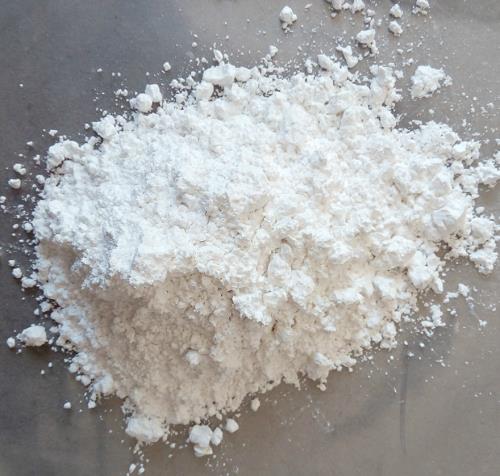
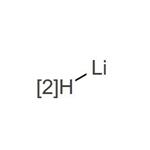
Lithium deuteride (LiD) is a stable isotopic compound that is commonly used in deuterium storage and energy storage applications because of its high melting point, low density, high deuterium concentration, and exceptional thermal stability in both vacuum and inert gases. In nuclear weapon: t used solid lithium deuteride rather than liquid deuterium and produced a yield of 15 megatons, 1,000 times as large as the Hiroshima bomb.

Isotope effects in lithium hydride and lithium deuteride crystals
A considerable amount of experimental data and theoretical studies evidence that isotope substitution influences thermal, elastic and dynamical properties of crystals. Isotope effects are especially pronounced whenever the reduced mass changes considerably. This happens in passing from LiH to LiD, two materials that have recently attracted much attention, as they are used in nuclear fusion and are involved in hydrogen-based energy production. From the theoretical point of view, lithium hydride and lithium deuteride are relevant test cases for any method that includes the description of quantum effects. In general, the crystal with lighter isotopes has larger lattice parameters. This purely quantum effect is due to the dependence of phonon frequencies on atomic masses and on anharmonic interactions. Isotope effects are important below the Debye temperature, θD, and progressively weaken at higher temperatures. As quantum effects are missed, standard MD is suited at temperatures beyond θD. Nevertheless, some authors used standard MD to describe isotope effects in lithium hydrides, at the expense of introducing two distinct empirical interatomic potentials, one fitted for 7LiH and the other for lithium deuteride. [1]
Isotope effects between the vibrational spectra of lithium hydride and lithium deuteride are mainly due to the difference in atomic masses. Indirect effects on interatomic forces due to the small difference in lattice constant can be safely neglected in the following discussion. We studied isotope effects in 7LiH and lithium deuteride by using a quantum thermal bath (QTB) that accounts for quantum effects on nuclear motion in molecular dynamics (MD) simulations. Two non-equivalent descriptions of interatomic forces have been considered: the ab initio DFT-GGA and a phenomenological approach using the shell model. In both cases, the experimental isotopic shift in the lattice parameter is reproduced, showing the adequacy of the QTB for describing such effects. Acoustic vibrational DOS are similar for lithium hydride and lithium deuteride, while optical phonons are shifted to higher frequencies for lithium hydride. The comparison of the phonon DOS obtained either in the harmonic regime or at kinetic energies that are representative of system dynamics including quantum effects illustrates the importance of anharmonic contributions. We attribute this discrepancy to the (likely erroneous) isotopic shift in bulk modulus as found within the shell model. Indeed, in both experiments and GGA-based QTB-MD simulations, bulk moduli of lithium hydride and lithium deuteride are equal within the statistical uncertainty whereas, for the shell model, the isotopic shift in bulk modulus is significant. These results might provide a route to derive suitable shell models for reliable simulations of light elements at high pressures.
Application to solid and porous lithium deuteride
Here we describe an improved enthalpy-based equation of state and results for solid and porous (porosity up to 1.78) lithium deuteride. This material is the lightest compound which is an insulator at normal conditions. The enthalpy-parameter versus pressure on five curves are used to derive an interpolation formula for its temperature dependence. A treatment of pore collapse, based on the P-α model and Menikoff’s modification, is given and checked with data on Cu powder. The Hugoniot curves of natural lithium deuteride (up to 1000GPa) and lithium-6 deuteride (up to 1000000GPa) are compared with data. The implementation of the equation of state in a hydrodynamic code is discussed, and results verified with Hugoniot data. Brief accounts of Vinet’s isotherm (extended with the quantum statistical model), an ion equation of state including dissociation, and new approximations to the electron thermal-pressure and thermal-energy are provided.[2]
References
[1]Dammak, Hichem et al. “Isotope effects in lithium hydride and lithium deuteride crystals by molecular dynamics simulations.” Journal of physics. Condensed matter : an Institute of Physics journal vol. 24,43 (2012): 435402. doi:10.1088/0953-8984/24/43/435402
[2]S.V.G. Menon , Bishnupriya N. (2025). Improved enthalpy-based equation of state and application to solid and porous lithium deuteride. Physica B-Condensed Matter, 722, Article 418061.

See also

Lastest Price from Lithium deuteride manufacturers
US $54.00-807.00/g2025-02-08
- CAS:
- 13587-16-1
- Min. Order:
- 1g
- Purity:
- 0.97
- Supply Ability:
- 10kg

US $0.00-0.00/g2024-11-13
- CAS:
- 13587-16-1
- Min. Order:
- 10g
- Purity:
- 98%min
- Supply Ability:
- 1 tons