Celestolide: Synthesis Methods, Detection Technologies and Ecotoxicological Risks
Introduction
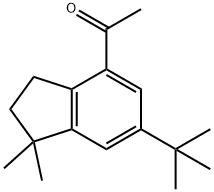
Celestolide (chemical name: 4-acetyl-6-tert-butyl-1,1-dimethylindane, ADBI for short) is an important synthetic polycyclic musk. Since its discovery by Beets et al. in the 1950s, it has been widely used as a fixative and fragrance ingredient due to its strong and long-lasting musk smell [1]. Different from nitro musk, Celestolide belongs to the indan class of non-nitrobenzene ring musk. Its molecular structure consists of fused cyclopentane and benzene rings, with substituents such as acetyl and tert-butyl groups [1]. Single crystal X-ray diffraction studies show that Celestolide crystallizes in the triclinic system. The asymmetric unit contains two independent molecules, which are related through non-crystallographic pseudo-symmetry operations. Its five-membered ring has a nearly ideal C(2) envelope conformation [1]. This study provides a structural basis for understanding the relationship between its molecular conformation and aroma.

Application and environmental trends
Celestolide is an aroma component in daily chemical products and is mainly added to perfumes, detergents, skin creams and air fresheners. Due to its high lipophilicity (log Kow ≈ 5.4) and chemical stability, it enters the aquatic environment in large quantities through domestic sewage after use [2]. Environmental monitoring shows that Celestolide has been detected in surface water, sewage treatment plant effluent and sludge. Although its concentration is usually lower than Galaxolide (HHCB) and Tonalide (AHTN), it still attracts attention due to its persistence and bioaccumulation potential [3]. Celestolide has been detected in fish fatty tissue from the Ruhr River in Germany, and its presence has also been found in human fatty tissue and breast milk [3], suggesting that the human body can be exposed to this substance through the food chain.
Synthesis method
Regarding the synthesis of Celestolide, the literature does not provide complete experimental steps, but based on its structure, the typical industrial synthesis route usually starts from tert-butylbenzene, which undergoes cyclization and alkylation with isoprene under the action of an acidic catalyst to generate 1,1-dimethyl-6-tert-butylindane, and then introduces an acetyl group through Friedel-Crafts acetylation reaction to finally obtain the target product [1]. Its molecular formula is C₁₇H₂₄O, its molecular weight is 244.38, and its melting point is 350.1–350.4 K. These physical and chemical parameters have been accurately measured [1].
Detection method: from SPME to green DES-membrane microextraction
Accurate determination of Celestolide in environmental samples relies on sensitive pretreatment and analytical techniques. Early studies optimized the method of solid-phase microextraction (SPME) combined with gas chromatography-mass spectrometry (GC-MS) and found that polydimethylsiloxane-divinylbenzene (PDMS-DVB) fiber had the highest extraction efficiency for Celestolide [5]. Under optimized non-equilibrium conditions (extraction time 45 min, temperature 30°C, no salt added), the limit of detection (LOD) of Celestolide is 14 ng/L, the relative standard deviation (RSD) is between 11%–18%, and the linear range is 28.6–286 ng/L [5]. This method was successfully applied to water samples from the Elbe River in Germany, but Celestolide was not detected (below the LOD) [5].
In recent years, in pursuit of green analytical chemistry, researchers have developed a new microextraction technology based on deep eutectic solvent (DES)-coated cellulose membranes [4]. The DES was synthesized from tetrabutylammonium bromide (TBAB) and caproic acid (C6) in a 1:3 molar ratio and coated on a cellulose acetate membrane. After Plackett-Burman design optimization, the optimal conditions are: DES volume 100 µL, membrane contact time 60 min, extraction time 15 min, methanol elution volume 300 µL [4]. Under these conditions, the linear range of Celestolide is 2.5–100 µg/L, the LOD is 0.06 µg/L, the LOQ is 0.2 µg/L, and the relative recovery rate is between 74%–99% (RSD < 7%) [4]. This method was evaluated by AGREE and BAGI tools as having a certain degree of greenness and practicality, and was successfully used to detect Celestolide in surface water of Portuguese rivers (but was not detected in actual samples) [4].
Ecotoxicology and health risks
The aquatic toxicity of Celestolide has been evaluated in a variety of model organisms. A life-cycle exposure test using marine copepod Nitocra spinipes showed that Celestolide caused 100% larval mortality at a concentration of 0.3 mg/L, while 0.1 mg/L significantly reduced the larval development rate, but the population intrinsic growth rate (rₘ) was not significantly affected below 0.03 mg/L [2]. Its 96-h LC₅₀ value is greater than 2 mg/L (cannot be accurately measured due to solubility limitations) [2]. It is worth noting that this study calculated the population growth rate through the modified Euler-Lotka equation and found that sensitive effects at the individual level (such as inhibition of larval development) are not necessarily reflected at the population level, reflecting the importance of population endpoints in ecological risk assessment [2].
In terms of genotoxicity, in vitro micronucleus tests using human peripheral lymphocytes and Hep G2 liver cancer cells showed that Celestolide did not induce a significant increase in micronucleus formation rate at up to a cytotoxic dose (approximately 205 µM), regardless of whether the S9 metabolic activation system was added [3]. It was also negative in the Salmonella reverse mutation test [3]. This indicates that Celestolide is not a genotoxic substance and its carcinogenic potential may arise from non-genotoxic mechanisms. In addition, the ecdysone agonist/antagonistic activity test in the Drosophila BII cell line showed that Celestolide has no specific hormonal activity at a concentration of 10⁻⁴ M, suggesting that its endocrine disrupting effect may be weak [2].
References
[1] DE RIDDER D J A, SCHENK H. Crystal Studies of Musk Compounds. IV. Structure of 4-Acetyl-6-tert-butyl-1,1-dimethylindan (Musk Celestolide)[J]. Acta Crystallographica Section C, 1992, 48: 140-142. doi:10.1107/S0108270191005580
[2] BREITHOLTZ M, WOLLENBERGER L, BENGTSSON B-E. Effects of four synthetic musks on the life cycle of the harpacticoid copepod Nitocra spinipes[J]. Aquatic Toxicology, 2003, 63(2): 103-118. doi:10.1016/S0166-445X(02)00180-2
[3] KEVEKORDES S, MERSCH-SUNDERMANN V, DIEZ M, et al. In vitro genotoxicity of polycyclic musk fragrances in the micronucleus test[J]. Mutation Research/Genetic Toxicology and Environmental Mutagenesis, 1997, 395(2-3): 153-160. doi:10.1016/S1383-5718(97)00164-1
[4] TERLIZZI F, FERNANDES J O, GONZALEZ T, et al. Microextraction of Polycyclic Musks from Surface Water with Deep-Eutectic-Solvent-Coated Membrane Followed by Gas Chromatography-Mass Spectrometry Analysis[J]. Chemosensors, 2025, 13(3): 88. doi:10.3390/chemosensors13030088
[5] WINKLER M, HEADLEY J V, PERU K M. Optimization of solid-phase microextraction for the gas chromatographic-mass spectrometric determination of synthetic musk fragrances in water samples[J]. Journal of Chromatography A, 2000, 903(1-2): 203-210. doi:10.1016/S0021-9673(00)00879-9
You may like
See also


Lastest Price from Celestolide manufacturers

$500.002026-08-03
- CAS:
- 13171-00-1
- Min. Order:
- 1KG
- Purity:
- 99%
- Supply Ability:
- 1000

2025-03-07
- CAS:
- 13171-00-1
- Min. Order:
- 1kg
- Purity:
- 98%min
- Supply Ability:
- 20tons