Blue Copper Peptide (CAS: 49557-75-7) is the world's first widely used cosmetic peptide. As a polypeptide ingredient with dual anti-aging and repair effects, it can not only promote the production of type I, IV, and VII collagen, but also activate fibroblasts that synthesize collagen, showing excellent anti-aging performance. At the same time, it can protect fibroblasts stimulated by UV radiation, reduce MMP-1 secretion, neutralize inflammatory factors caused by sensitivity, repair damaged skin barriers, and has outstanding anti-allergic and soothing abilities. This "dual-effect integration" feature is particularly rare among skincare raw materials. This article will comprehensively analyze this star ingredient from the dimensions of origin, synthesis, efficacy, and application.
01 Discovery of Blue Copper Peptide
In the 1970s, Dr. Loren Pickart from the United States discovered copper peptides in human blood and found that the content of copper peptides in the blood of young people is 2.5 times that of the elderly. This discovery led Dr. Pickart and many scientists to start research on the application of copper peptides. Studies have found that copper peptides have significant effects in the treatment of wounds and skin damage, and also have a strong wrinkle-removing and repairing effect – they can act on the epidermis and dermis, increasing skin thickness by stimulating collagen synthesis.
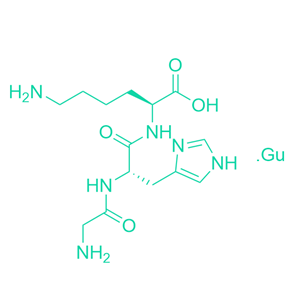
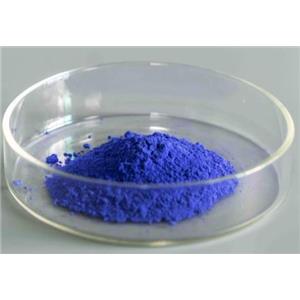
Subsequent studies have continuously confirmed the efficacy and safety of copper peptides, making them the world's first peptide product applied in the skincare field. Blue Copper Peptide (CAS: 49557-75-7) is a compound formed by the combination of copper ions and Tripeptide-1. It is named "Blue Copper Peptide" because it presents a unique blue color when combined with aqueous solution.
02 Functions of Blue Copper Peptide
Blue Copper Peptide (CAS: 49557-75-7) is a complex formed by Tripeptide-1 (Glycine-Histidine-Lysine) and copper ions. Copper can exert antioxidant effects by affecting antioxidant enzymes in animal organisms. Many key enzymes in human skin and body (participating in connective tissue formation, antioxidant, and cellular respiration) rely on copper ions. At the same time, copper ions can transmit cellular signals and regulate cellular behavior and metabolism, such as serving as an important signal source for stem cell proliferation and tissue repair.
In the skincare field, the application pain point of peptide ingredients is that most of them cannot penetrate the skin's stratum corneum and are difficult to act on the deep layer of the skin. However, Blue Copper Peptide is the only peptide-copper complex that can penetrate the stratum corneum lipid barrier, which can directly reach epidermal cells to play a role. Its core mechanism of action can be summarized into four points: ① Repair the functional structure of the basement membrane and activate the vitality of damaged cells; ② Repair glycosaminoglycans (GAGs) and restore the function of the extracellular matrix; ③ Promote the synthesis of type I/IV/VI collagen and fibrin; ④ Have dual anti-inflammatory and antioxidant effects. The specific functional performance is as follows:
Skin Remodeling and Wound Healing Promotion
It can balance the decomposition of extracellular matrix proteins (ECM proteins) to prevent excessive skin damage; it can also increase decorin, reduce scar formation by regulating collagen fibril assembly, and reduce the level of transforming growth factor (TGF-beta) that promotes scar formation. In addition, Blue Copper Peptide can guide immune cells and endothelial cells to the damaged site, further verifying its role in promoting wound healing.
Stimulating Collagen Synthesis and Enhancing Skin Firmness
Experiments have confirmed that Tripeptide-1 can stimulate the synthesis of collagen, selective glycosaminoglycans, and small proteoglycan deproteins, and can also regulate the synthesis of metalloproteinases – it not only inhibits enzymes that accelerate the decomposition of extracellular matrix proteins, but also activates enzymes that inhibit protease activity, realizing precise regulation of skin protein levels and enhancing skin elasticity and firmness from the root.
Anti-Inflammatory and Antioxidant, Resisting Skin Aging
Inflammation is often accompanied by oxidative damage. Reactive oxygen species (ROS) and other oxidants produced by immune cells when fighting bacteria and damage will accelerate skin aging. Therefore, anti-inflammation and antioxidant are the core of anti-aging skincare. Blue Copper Peptide can reduce the levels of acute-phase inflammatory cytokines such as TGF-beta and TNF-a, effectively inhibiting inflammation; when added to sunscreen products, it can also reduce harmful by-products of lipid peroxidation and reduce inflammation and skin damage caused by ultraviolet radiation.
Promoting Stem Cell Regeneration and Restoring Damaged Cell Functions
It can maintain the stem cell activity of basal keratinocytes, restore their proliferation ability, and provide core power for skin repair and rejuvenation; at the same time, it has a repairing effect on fibroblasts (the core cells for wound healing and tissue regeneration, which can synthesize extracellular matrix and secrete growth factors). Studies in 2005 have confirmed that Tripeptide-1 can restore the vitality of irradiated fibroblasts.
Overall Efficacy Summary: Blue Copper Peptide (CAS: 49557-75-7) can improve skin firmness and elasticity, reduce fine lines, brighten skin tone, reduce pigmentation and spots, and significantly promote cell proliferation. It has multiple effects such as anti-aging, improving redness, wound healing, and hair growth.
03 Synthesis Methods of Blue Copper Peptide
There are mainly two synthesis methods for Blue Copper Peptide (CAS: 49557-75-7): solid-phase synthesis and liquid-phase synthesis. The two methods have significant differences in applicable scenarios and process characteristics, which are as follows:
Solid-Phase Synthesis
It is the most common synthesis technology currently. It requires the use of solid-phase synthesis resin, combined with preparative high-performance liquid chromatography (HPLC) purification and freeze-drying technology, and the synthesis process is programmed. Applicable Scenarios: Synthesis of long peptides with more than 10 amino acids;Disadvantages: Batch output is limited, the use of resin and a large amount of solvent increases the cost, and the finished product is freeze-dried powder with a large specific surface area, which is easy to absorb moisture.
Liquid-Phase Synthesis
It does not require preparative HPLC purification. Applicable Scenarios: Synthesis of short peptides (most cosmetic peptides are short peptides, while pharmaceutical peptides are mostly long peptides); Characteristics: It has high requirements for the R&D team, requiring rich experience in chemical synthesis, and continuous optimization of the chemical synthesis route is needed.
04 Quality Judgment of Blue Copper Peptide
To judge the quality of Blue Copper Peptide (CAS: 49557-75-7), we need to start from four core dimensions: appearance, structure, characteristics, and production capacity. This is also the key to identifying the authenticity and quality of skincare products containing Blue Copper Peptide:
Appearance and Color: High-quality Blue Copper Peptide crystals are pure blue (the characteristic color of copper ions). If the crystal color is light or uneven, it is likely to be a low-purity product or mixed with other substances.
Chemical Structure Verification: It is necessary to determine the molecular weight by mass spectrometry and compare it with the standard product for HPLC retention time to ensure the accuracy of the chemical structure – this is the basis for Blue Copper Peptide to have biological activity, which can be verified through brand traceability or laboratory testing.
Product Characteristics: High-quality Blue Copper Peptide has high crystal purity, is not easy to absorb moisture, and is easy to store; high-purity crystals have clear single crystal diffraction patterns, and their purity can be confirmed by HPLC detection.
Batch Production: Stable large-scale production capacity is a decisive factor to ensure the uniformity and stability of product quality. Brands that can achieve large-scale supply are more trustworthy in quality.
In summary, to identify skincare products containing Blue Copper Peptide, we need to comprehensively consider appearance and color, chemical structure, product characteristics, synthesis technology, batch production, product formula, and price reference. Only multi-dimensional judgment can select high-quality products.
05 Application Points of Blue Copper Peptide
The ionic nature of Blue Copper Peptide (CAS: 49557-75-7) makes it poorly compatible in formulas, and it is easy to react with various ingredients, leading to discoloration, odor change, and inactivation. At the same time, its activity is greatly affected by factors such as temperature and pH. Therefore, the following points must be strictly followed in application (formula R&D, daily use):
Ingredient Matching Taboos
Avoid contact with strong oxidants: Histidine in Blue Copper Peptide is easy to be oxidized, leading to ingredient inactivation;
Avoid using with acidic ingredients: Acidic ingredients such as fruit acids, A acids, and high-concentration water-soluble L-ascorbic acid (VC) will destroy the structure of Blue Copper Peptide, and Blue Copper Peptide will also accelerate VC oxidation, resulting in double inactivation of both;
Avoid matching with ingredients that can form complexes with Cu ions: Caprylyl Hydroxamic Acid (CHA) cannot be used as a preservative in copper peptide formulas; Carnosine will compete with copper ions for binding, making the solution purple; EDTA will capture copper ions, making the solution green, and all three will lead to inactivation of Blue Copper Peptide.
Environmental and Formula Requirements
Temperature and pH: It should be added in an environment below 40℃. First, adjust the formula pH to about 7, then add GHK-Cu solution; the stable pH range of Blue Copper Peptide is 4-6. It will dissociate when pH is below 4, and completely dissociate when pH is below 1.8. Too low or too high pH will lead to its decomposition and discoloration;
Thickener Selection: Carbomer contains a polycarboxyl structure, which will affect the stability of Blue Copper Peptide and should be avoided;
Prevention of Solution Precipitation: Referring to the method of US Patent US2003014892, adding glycine accounting for 18% of the copper peptide weight or lysine accounting for 52% of the copper peptide weight to 10% copper peptide solution can achieve no solid precipitation within ten weeks.
Compatible Matching Ingredients
Blue Copper Peptide (CAS: 49557-75-7) can be matched with ingredients such as Ectoin, Centella Asiatica, and Vitamin B5 without mutual antagonism, and can also achieve superimposed repair effects. For example, the essence containing 0.5% Blue Copper Peptide + 2% Ectoin + triple Centella Asiatica + 2% Vitamin B5 has been experimentally verified to have excellent repair and soothing effects.
06 Application Bottlenecks of Blue Copper Peptide
Although Blue Copper Peptide (CAS: 49557-75-7) has comprehensive efficacy and the rare characteristics of anti-aging and repair, due to its own ionic nature, it has poor compatibility with various antioxidants, plant extracts, some thickeners, preservatives and other ingredients in formulas. The prepared products are prone to unstable phenomena such as discoloration and odor change. This technical problem has become the core limitation for its large-scale promotion and use, and its wide application still needs further research and breakthroughs in related professional technologies.
References:
[1] Blue Copper Peptide Cosmetics Application Blue Book