Configuration-specific Monoclonal Antibody Based
RalB Activation Assay Kit
Catalog Number:CR-W81501
20 assays
Product Description
Small GTPases are a super-family of cellular signaling regulators. The Ras-like small G proteins, RalA/B,
are important components of Ras signaling pathways, implicated in the initiation and maintenance of
tumorigenic transformation, as well as vesicle transport, apoptosis, transcription, cell migration, and cell proliferation.
Currently there is no direct assay to measure the activation of Ral GTPases.
Bioyears Biosciences RalB Activation Assay Kit is based on the configuration-specific monoclonal
antibody that specifically recognizes Ral-GTP, but not Ral-GDP, and a RalB specific rabbit polyclonal
antibody. Given the high affinity of monoclonal antibodies to their antigens, the activation assay could
be performed in a short time. This assay provides the reliable results with consistent reproducibility.
These anti-Ral-GTP monoclonal antibodies can also be used to monitor the activation of Ral in cells and in tissues by immunohistochemistry.
Bioyears Biosciences RalB Activation Assay Kit provides a simple and fast method to monitor the
activation of RalB. Each kit provides sufficient quantities to perform 20 assays.
Assay Principle
Bioyears Biosciences RalB Activation Assay Kit bases on the configuration-specific anti-Ral-GTP
monoclonal antibody to measure the active Ral-GTP levels, either from cell extracts or from in vitro
GTPγS loading Ral activation assays. Briefly, anti-active Ral mouse monoclonal antibody will be
incubated with cell lysates containing Ral-GTP. The bound active Ral will then be pulled down by
protein A/G agarose. The precipitated active RalB or RalA will be detected by immunoblot analysis
using anti- RalB or RalA rabbit polyclonal antibody, respectively.
Kit Components
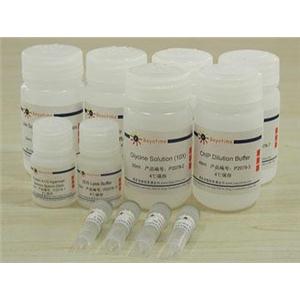
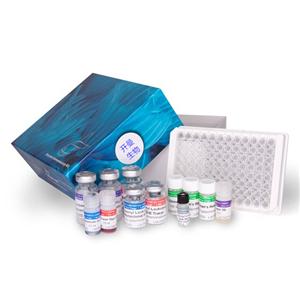
1. Anti-active Ral, Mouse Monoclonal Antibody (Catalog No.CR-M26913): One vial – 22 µL (1
mg/ml) in PBS, pH 7.4, containing 50% glycerol and 0.05% sodium azide. This antibody
specifically recognizes Ral-GTP from all vertebrates.
2. Protein A/G Agarose (Catalog No. 30301): One vial – 400 µL of 50% slurry.
3. 5X Assay/Lysis Buffer (Catalog No. 30303): One bottle – 30 mL of 250 mM Tris-HCl, pH 8, 750
mM NaCl, 50 mM MgCl2, 5 mM EDTA, 5% Triton X-100.
4. Anti-RalB, Rabbit Polyclonal Antibody (Catalog No. 21033): One vial – 100 µL (1 mg/ml) in
PBS, pH 7.4, contained 50% glycerol.
5. 100 X GTPγS (Catalog No. 30302): One vial –100 µl at 10 mM, use 5 µL of GTPγS for
GTP-labeling of 0.5 mL of cell lysate.
6. 100 X GDP (Catalog No. 30304): One vial –100 µl at 100 mM, use 5 µL of GDP for
GDP-labeling of 0.5 mL of cell lysate.
Storage
Store all kit components at 4ºC until their expiration dates.
Materials Needed but Not Supplied
1. Stimulated and non-stimulated cell lysates
2. Protease inhibitors
3. 4 °C tube rocker or shaker
4. 0.5 M EDTA, pH8.0
5. 1 M MgCl2
6. 2X reducing SDS-PAGE sample buffer
7. Electrophoresis and immunoblotting systems
8. Immunoblotting wash buffer such as TBST (10 mM Tris-HCl, pH 7.4, 0.15 M NaCl, 0.05%Tween-20)
9. Immunoblotting blocking buffer (TBST containing 5% Non-fat Dry Milk or 3% BSA)
10. PVDF or nitrocellulose membrane
11. Secondary Antibody
12. ECL Detection Reagents
Reagent Preparation
• 1X Assay/Lysis Buffer: Mix the 5X Stock briefly and dilute to 1X in deionized water. Just prior to
usage, add protease inhibitors such as 1 mM PMSF, 10 µg/mL leupeptin, and 10 µg/mL aprotinin.
Sample Preparation
Adherent Cells
1. Culture cells (one 10-cm plate, ~ 107cells) to approximately 80-90% confluence. Stimulate cells
with activator or inhibitor as desired.
2. Aspirate the culture media and wash twice with ice-cold PBS.
3. Completely remove the final PBS wash and add ice-cold 1X Assay/Lysis Buffer to the cells (0.5
- 1 mL per 10 cm tissue culture plate).
4. Place the culture plates on ice for 10-20 minutes.
5. Detach the cells from the plates by scraping with a cell scraper.
6. Transfer the lysates to appropriate size tubes and place on ice.
7. If nuclear lysis occurs, the cell lysates may become very viscous and difficult to pipette. If this
occurs, lysates can be passed through a 27½-gauge syringe needle 3-4 times to shear thegenomic DNA.
8. Clear the lysates by centrifugation for 10 minutes (12,000 x g at 4 °C).
9. Collect the supernatant and store samples (~1-2 mg of total proteins) on ice for immediate use,
or snap freeze and store at - 70 °C for future use.
Suspension Cells
1. Culture cells and stimulate with activator or inhibitor as desired.
2. Perform a cell count, and then pellet the cells by centrifugation.
3. Aspirate the culture media and wash twice with ice-cold PBS.
4. Completely remove the final PBS wash and add ice-cold 1X Assay/Lysis Buffer to the cell pellet (0.5 – 1 mL per 1 x 10⁷cells).
5. Lyse the cells by repeated pipetting.
6. Transfer the lysates to appropriate size tubes and place on ice.
7. If nuclear lysis occurs, the cell lysates may become very viscous and difficult to pipette. If this
occurs, lysates can be passed through a 27½-gauge syringe needle 3-4 times to shear the genomic DNA.
8. Clear the lysates by centrifugation for 10 minutes (12,000 x g at 4 °C).
9. Collect the supernatant and store samples on ice for immediate use, or snap freeze and store at -70 °C for future use.
In vitro GTPγS/GDP Protein Loading for positive and negative controls
Note: In vivo stimulation of cells will activate approximately 10% of the available Ral, whereas in
vitro GTPγS protein loading will activate nearly 90% of the Ral.
1, Aliquot 0.5 ml of each cell extract to two microfuge tubes (or use 1 µg of purified RalB protein).
2, To each tube, add 20 µl of 0.5 M EDTA (to 20 mM final concentration).
3, Add 5 µl of 100 X GTPγS (to 100 µM, final concentration) to one tube (positive control).
4, Add 5 µl of 100 X GDP (to 1 mM, final concentration) to the second tube (negative control).
5, Incubate the tubes at 30°C for 30 minutes with agitation.
6, Stop loading by placing the tubes on ice and adding 32.5 µl of 1 M MgCl2 (to 60 mM, finalconcentration).
Assay Procedure
I. Active Ral Pull-Down Assay
1. Aliquot 0.5 – 1 mL of cell lysate to a microcentrifuge tube.
2. Adjust the volume of each sample to 1 mL with 1X Assay/Lysis Buffer.
3. Add 1 µl anti-active Ral monoclonal antibody to the tube.
4. Thoroughly resuspend the protein A/G Agarose bead slurry by vortexing or titurating.
5. Quickly add 20 µL of resuspended bead slurry to each tube.
6. Incubate the tubes at 4 °C for 1 hour with gentle agitation.
7. Pellet the beads by centrifugation for 1 min at 5,000 x g.
8. Aspirate and discard the supernatant, making sure not to disturb/remove the bead pellet.
9. Wash the bead 3 times with 0.5 mL of 1X Assay/Lysis Buffer, centrifuging and aspirating each
time.
10. After the last wash, pellet the beads and carefully remove all the supernatant.
11. Resuspend the bead pellet in 20 µL of 2X reducing SDS-PAGE sample buffer.
12. Boil each sample for 5 minutes.
13. Centrifuge each sample for 10 seconds at 5,000 x g.
II. Electrophoresis and Transfer
1. Load 15 µL/well of pull-down supernatant to a polyacrylamide gel (17%). Also, it’s
recommended to include a pre-stained MW standard (as an indicator of a successful transfer in
step 3).
2. Perform SDS-PAGE following the manufacturer’s instructions.
3. Transfer the gel proteins to a PVDF or nitrocellulose membrane following the manufacturer’s
instructions.
III. Immunoblotting and Detection (all steps are at room temperature, with agitation)
1. Following the electroblotting step, immerse the PVDF membrane in 100% Methanol for 15
seconds, and then allow it to dry at room temperature for 5 minutes.
Note: If Nitrocellulose is used instead of PVDF, this step should be skipped.
2. Block the membrane with 5% non-fat dry milk or 3% BSA in TBST for 1 hr at room temperature
with constant agitation.
Incubate the membrane with anti-RalB rabbit polyclonal antibody, freshly diluted 1:50~1000
(depending on the amount of RalB proteins in your samples) in 5% non-fat dry milk or 3%
BSA/TBST, for 1-2 hr at room temperature with constant agitation or at 4oC overnight.
3. Wash the blotted membrane three times with TBST, 5 minutes each time.
4. Incubate the membrane with a secondary antibody (e.g. Goat Anti-Rabbit IgG, HRP-conjugate),
freshly diluted 1:1000 in 5% non-fat dry milk or 3% BSA/TBST, for 1 hr at room temperature
with constant agitation.
5. Wash the blotted membrane three times with TBST, 5 minutes each time.
6. Use the detection method of your choice such as ECL.
Example of Results
The following figure demonstrates typical results seen with Bioyears Biosciences RalB Activation
Assay Kit. One should use the data below for reference only.

RalB activation assay. Purified RalB proteins were immunoprecipitated after treated with GDP
(lane 1) or GTPγS (lane 2). Immunoprecipitation was done with the anti-active Ral monoclonal
antibody (Cat. No. CR-M26913). Immunoblot was with an anti-RalB rabbit polyclonal antibody(Cat. No.CR-R
21033).