Items | Specifications | Results |
Appearance | White to off-white solid | Off-white solid |
Identification | The retention time of the major peak of the Sample solution corresponds to that of the Standard solution. | Complies |
Water | ≤1.0% | 0.75% |
Isomer | ≤0.15% | ND |
Related substances | Impurity A:≤0.3% Individual impurities:≤0.3% Total impurities:≤1.0% | ND 0.06% 0.13% |
Purity | ≥99.0% | 99.87% |
Conclusion | The product conforms to the above specifications. |
This compound is a chemically synthesized organic molecule that serves as a key building block (intermediate) in medicinal chemistry and drug discovery. Its complex name describes its precise structure:
Core Structure: A cyclohexane ring with specific three-dimensional stereochemistry (1R,2S,5S). This means the relative positions of the attached groups are fixed and crucial for its biological activity.
Functional Groups:
Primary Amine (-NH₂): The reactive amine group is protected as a tert-butyl carbamate (Boc). This Boc group is a standard protecting group in organic synthesis; it masks the reactive amine during other chemical steps and can be removed later under mild acidic conditions.
Secondary Amine: Attached to the ring is a dimethylamide group [-C(O)N(CH₃)₂]. This is a common pharmacophore (part of a molecule responsible for its interaction with a biological target) that can mimic peptide bonds or participate in hydrogen bonding.
Salt Form: It is an oxalate salt. The basic amine(s) in the molecule have been reacted with oxalic acid to form a stable, crystalline, and often more easily handleable salt. This improves its purity, stability, and solubility properties for storage and use.
In summary: It is a stereochemically defined, Boc-protected diamino cyclohexane derivative, isolated as an oxalate salt.
2. Its Primary Use and Applications:
This compound is not a drug itself but a high-value synthetic intermediate. Its uses are almost exclusively in pharmaceutical research and development.
Primary Use: To synthesize more complex drug candidates, particularly those targeting proteases and kinases.
Specific Context and Examples:
Protease Inhibitor Backbone: The (1R,2S,5S)-2-amino-5-(aminocarbonyl)cyclohexyl structure is a classic scaffold found in inhibitors of various proteases (enzymes that cut proteins). It is famously known as the "Boc-DAP" backbone or related to the structure used in:
HIV Protease Inhibitors: Early classes of anti-AIDS drugs (e.g., precursors to drugs like Saquinavir) used this cyclohexylamine-derived core to mimic the natural peptide substrate of the HIV protease enzyme.
HCV Protease Inhibitors: Similar scaffolds have been explored in the development of treatments for Hepatitis C.
Other Serine/Cysteine Proteases: This scaffold is versatile and has been used in programs targeting enzymes involved in cancer, inflammation, and infectious diseases.
Kinase Inhibitor Fragment: The dimethylamide group and the basic amine make this fragment a useful component in the synthesis of kinase inhibitors (a major class of cancer drugs). The structure can act as a hinge-binding motif or a spacer element within the drug molecule.
Peptidomimetics: Its structure mimics a dipeptide (two linked amino acids) but with a rigid cyclohexane ring instead of a flexible chain. This rigidity can lead to better selectivity, potency, and metabolic stability compared to a natural peptide.
Why is it made and sold in this form?
Stereochemical Purity: The (1R,2S,5S) label confirms it's a single, specific isomer. Biological targets (enzymes, receptors) are highly sensitive to 3D shape, so this purity is essential.
Protected Amine: The Boc group allows chemists to perform reactions on other parts of the molecule without affecting the valuable -NH₂ group.
Salt Form: The oxalate salt is typically the form in which the intermediate is isolated, purified, characterized, and sold by chemical suppliers (e.g., Sigma-Aldrich, TCI, Combi-Blocks).
In a Nutshell: Think of this compound as a specialized, high-precision Lego brick used by pharmaceutical chemists to build potential new medicines, primarily for viral diseases (like HIV/HCV) and cancer. Its value lies in its defined 3D shape and reactive handles, which allow for the systematic construction of complex molecules designed to interact with specific disease targets.

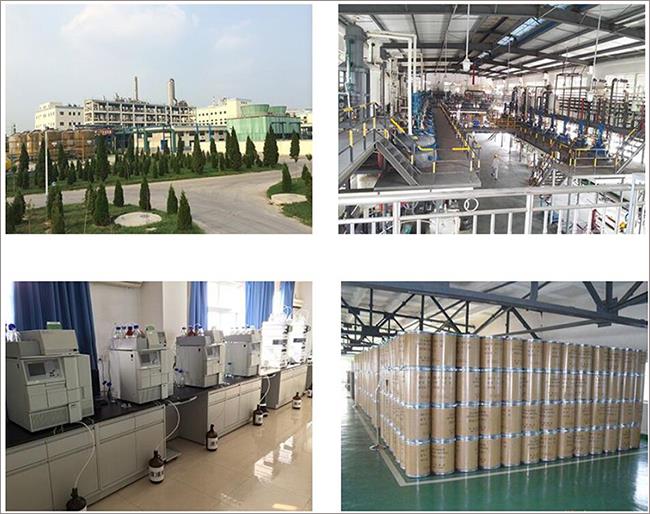

![tert-Butyl [(1R,2S,5S)-2-amino-5-[(dimethylamino)carbonyl]cyclohexyl]carbamate oxalate](/ProductImageEN2/2025-12/Large/80a4dea0-11b8-4717-aebc-45291e171833.jpg)
![tert-Butyl [(1R,2S,5S)-2-amino-5-[(dimethylamino)carbonyl]cyclohexyl]carbamate oxalate](/ProductImageEN2/2025-12/Large/ad5f4f4d-ef2a-4068-90c8-a0caefaa8f88.jpg)
![tert-Butyl [(1R,2S,5S)-2-amino-5-[(dimethylamino)carbonyl]cyclohexyl]carbamate oxalate](/ProductImageEN2/2025-12/Large/a555372f-ad7f-4f90-8c45-a878ec62e092.jpg)
![tert-Butyl [(1R,2S,5S)-2-amino-5-[(dimethylamino)carbonyl]cyclohexyl]carbamate oxalate](/ProductImageEN2/2025-12/Large/3629c573-dc13-4703-9e05-0083dfa6be66.jpg)
![tert-Butyl [(1R,2S,5S)-2-amino-5-[(dimethylamino)carbonyl]cyclohexyl]carbamate oxalate](/ProductImageEN2/2025-12/Large/473fbece-ab35-41f3-bfb9-5da2282139c1.jpg)

 China
China