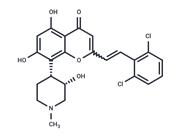
| Name | IBR2 |
| Description | IBR2 (Isoquinoline) is a potent and specific RAD51 inhibitor known for its ability to suppress RAD51-mediated DNA double-strand break repair. By interfering with RAD51 multimerization, accelerating proteasome-mediated RAD51 protein degradation, inhibiting cancer cell growth, and inducing apoptosis, IBR2 has proved to be an effective compound in these aspects. |
| In vitro | IBR2 can inhibit the growth of triple-negative human breast cancer cell line MBA-MD-468 with IC50 of 14.8 μM. IBR2 shows interesting RAD51 inhibition activities. RAD51 is rapidly degraded in IBR2-treated cancer cells, and the homologous recombination repair is impaired, subsequently leading to cell death. The IC50 values of the original IBR2 are in the range of 12-20 μM for most tested cancer cell lines[1]. |
| Storage | Powder: -20°C for 3 years | In solvent: -80°C for 1 year
Shipping with blue ice/Shipping at ambient temperature. |
| Solubility Information | DMSO : 250 mg/mL (624.24 mM), Sonication is recommended.
10% DMSO+40% PEG300+5% Tween 80+45% Saline : 10 mg/mL (24.97 mM), Solution.
10% DMSO+90% Saline : < 10 mg/mL (24.97 mM), Lower concentrations may be soluble, but exact solubility limit is unknown.
|
| Keywords | RNASynthesis | RNA Synthesis | RAD51 | Inhibitor | inhibit | IBR-2 | IBR2 | IBR 2 | DNASynthesis | DNA Synthesis | Apoptosis |
| Inhibitors Related | Stavudine | Aceglutamide | Urea | Tamoxifen | Cysteamine hydrochloride | Guanidine hydrochloride | Metronidazole | Formamide | Thymidine | Dimethyl phthalate | Alginic acid | Sildenafil citrate |
| Related Compound Libraries | Apoptosis Compound Library | DNA Damage & Repair Compound Library | Bioactive Compound Library | Inhibitor Library | Anti-Aging Compound Library | Bioactive Compounds Library Max | Cell Cycle Compound Library | Anti-Cancer Compound Library | Human Metabolite Library | Anti-Cancer Active Compound Library |



 United States