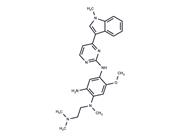
| Name | DPPH |
| Description | DPPH (2,2-Diphenyl-1-picrylhydrazyl) is a cell-permeable, stable free radical commonly used to evaluate the free radical scavenging ability, hydrogen donation capacity of compounds, and to measure the antioxidant activity of tissue extracts. |
| In vitro | DPPH shows a strong absorption band at 517 nm due to its odd electron number, resulting in a dark purple solution that loses color as electron pairs detach, with decoloration stoichiometrically depending on the absorbed electrons. In alcohol solutions of 0.5 mM, it adheres to the Lambert-Beer law within the effective absorption range. DPPH is a fast, simple, and cost-effective method to evaluate the free radical scavenging or hydrogen-donating ability of compounds and the antioxidant activity of foods. It can quantify antioxidants in complex biological systems and solid or liquid samples. This method effectively determines the total antioxidant capacity and free radical scavenging activity in fruit and vegetable juices, wheat grains and bran, vegetables, conjugated linoleic acid, herbal medicine, edible seed oil, and flour in various solvents (ethanol, acetone, methanol, ethanol, and benzene). It also assesses antioxidant properties in cysteine, glutathione, ascorbic acid, tocopherol, and polyhydroxyaromatic compounds in olive oil, fruits, fruit juices, and wines. |
| In vivo | METHODS: To study the hepatotoxic effects, DPPH (100 mg/kg) was administered intraperitoneally to ICR mice to induce acute liver injury, and the mice were killed 12, 24, 48 and 72 h after treatment to obtain serum and liver.
RESULTS: DPPH increased aminotransferase activity, MDA and NO levels, and significantly decreased GSH levels and SOD, CAT and GPx activities.The livers of DPPH-treated mice showed significant histopathological changes characterized by hepatocyte swelling and vacuolar degeneration.The mRNA levels of proinflammatory cytokines were elevated in the DPPH-treated group. The above results suggest that DPPH induces acute hepatotoxicity in mice. [3] |
| Storage | Store at low temperature,Keep away from moisture,Keep away from direct sunlight,
Powder: -20°C for 3 years | In solvent: -80°C for 1 year
Shipping with blue ice/Shipping at ambient temperature. |
| Solubility Information | 10% DMSO+40% PEG300+5% Tween 80+45% Saline : 2.00 mg/mL (5.06 mM), Sonication is recommended.
DMSO : 24.00 mg/mL (60.71 mM), Sonication is recommended.
|
| Keywords | Inhibitor | inhibit | DPPH |
| Inhibitors Related | Ethoxyquin | Kaolin | Allopurinol | Imeglimin hydrochloride | L-Ascorbic acid | Ethyl linoleate | Magnesium acetate tetrahydrate | Inosine | L-Cystine | Dimethyl itaconate | L-Ascorbic acid sodium salt | Dimethyl phthalate |
| Related Compound Libraries | Bioactive Compounds Library Max | Ferroptosis Compound Library | Bioactive Compound Library | Antioxidant Compound Library | NO PAINS Compound Library | Anti-Aging Compound Library | Immunology/Inflammation Compound Library | Oxidation-Reduction Compound Library |



 United States