Property | Value |
Systematic Name | Dibenzothiophene, 4-phenyl-6-[3-(4,4,5,5-tetramethyl-1,3,2-dioxaborolan-2-yl)phenyl]- |
Common Name | 4,4,5,5-Tetramethyl-2-(3-(6-phenyldibenzo[b,d]thiophen-4-yl)phenyl)-1,3,2-dioxaborolane |
CAS Number | 1858289-74-3 |
Molecular Formula | C₃₀H₂₇BO₂S |
Molecular Weight | 462.41 g/mol |
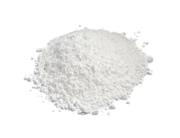
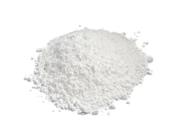
Appearance | White crystal |
Boiling Point | 657.1 ± 43.0 °C (predicted) |
Density | 1.22 ± 0.1 g/cm³ (predicted) |
Description of Dibenzothiophene, 4-phenyl-6-[3-(4,4,5,5-tetramethyl-1,3,2-dioxaborolan-2-yl)phenyl]-
4-Phenyl-6-[3-(4,4,5,5-tetramethyl-1,3,2-dioxaborolan-2-yl)phenyl]dibenzothiophene (CAS: 1858289-74-3) is a specialized boronic ester derivative of dibenzothiophene, serving as a key building block in organic synthesis. This compound enables the construction of extended π-conjugated systems for organic light-emitting diodes (OLEDs). It facilitates the development of high-efficiency host materials and phosphorescent emitters, enhancing device performance in displays and lighting applications.
Application of Dibenzothiophene, 4-phenyl-6-[3-(4,4,5,5-tetramethyl-1,3,2-dioxaborolan-2-yl)phenyl]-
4-Phenyl-6-[3-(4,4,5,5-tetramethyl-1,3,2-dioxaborolan-2-yl)phenyl]dibenzothiophene is a specialized boronic ester intermediate pivotal in organic electronics, particularly for Suzuki-Miyaura cross-coupling reactions to construct extended π-conjugated frameworks in OLED devices. It enables the synthesis of high-performance host materials, phosphorescent emitters, and charge transport layers, enhancing luminous efficiency, color purity, and operational stability in displays and solid-state lighting. As a building block for dibenzothiophene-based heterocycles, it supports advancements in flexible electronics, sensors, and photovoltaic materials due to its thermal robustness and tunable electronic properties.
Storage of Dibenzothiophene, 4-phenyl-6-[3-(4,4,5,5-tetramethyl-1,3,2-dioxaborolan-2-yl)phenyl]-
It should be kept in a cool, dry, dark place at 2-8°C under an inert atmosphere (e.g., nitrogen) to prevent hydrolysis and oxidation. Use airtight, sealed containers. Avoid light, humidity, and temperature fluctuations.

![Dibenzothiophene, 4-phenyl-6-[3-(4,4,5,5-tetramethyl-1,3,2-dioxaborolan-2-yl)phenyl]-](/ProductImageEN2/2025-12/Large/1e22187a-d490-4989-ab8f-47232fc488ba.png)
![Dibenzothiophene, 4-phenyl-6-[3-(4,4,5,5-tetramethyl-1,3,2-dioxaborolan-2-yl)phenyl]-](/ProductImageEN2/2025-12/Large/9eaa2018-1768-4b49-8677-9d04cc268e81.png)

 China
China