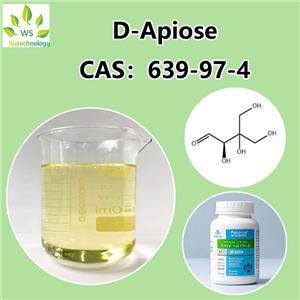
D-Apiose is a unique branched-chain pentose sugar found primarily in plants. Its distinct structure and biological roles give it several applications across various fields:
1. Plant Biology & Cell Wall Research
- Cell Wall Integrity:
- Key component of rhamnogalacturonan-II (RG-II), a pectin polysaccharide essential for plant cell wall strength.
- Studies on D-apiose help understand how plants maintain structural integrity and respond to stress (e.g., pathogens, drought).
- Enzyme Studies:
- Used to investigate apiose-specific enzymes (e.g., UDP-apiose/UDP-xylose synthase) in sugar metabolism.
2. Pharmaceutical & Medicinal Chemistry
- Bioactive Glycosides:
- Found in natural glycosides (e.g., apiin from parsley, celery) with potential anti-inflammatory, antioxidant, or anticancer properties.
- Modifying D-apiose-containing compounds may enhance drug bioavailability or targeting.
- Chiral Building Block:
- Its branched structure serves as a scaffold for synthesizing complex molecules (e.g., nucleoside analogs).
3. Food & Nutraceuticals
- Functional Foods:
- RG-II pectin (containing D-apiose) acts as a prebiotic, promoting gut microbiota health.
- Natural Sweeteners:
- Rare sugar with potential low-calorie applications (research ongoing).
4. Materials Science
- Biodegradable Polymers:
- D-apiose derivatives could be used to design bio-based hydrogels or films for medical/agricultural use.
5. Diagnostic Tools
- Plant Pathogen Detection:
- Some pathogens metabolize D-apiose; its enzymes may serve as biomarkers for disease detection.
Challenges & Future Directions
- Limited Availability: Extraction is inefficient; synthetic or enzymatic production is being explored.
- Underexplored Bioactivity: Potential roles in cell signaling or drug delivery need further study.


 China
China