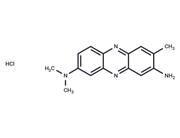
| Name | Congo Red |
| Description | Congo Red (Direct Red 28) is an azo dye. It binding been used as a diagnostic test for the presence of amyloid in tissue sections. |
| Cell Research | Instructions
I. Solution preparation
1. Congo Red working solution: Dissolve Congo Red in distilled water or an appropriate buffer, usually at a concentration of 0.5–1% (w/v).
When staining for amyloid, it is recommended to add a high concentration of sodium chloride (such as 80% saturated sodium chloride solution) to enhance the selectivity of the dye for amyloid.
2. Alkaline alcohol differentiation solution (for differentiation after staining): Dissolve 1% NaOH in 50% ethanol and set aside.
3. Contrast staining solution (such as Mayer's hematoxylin): Used to stain cell nuclei and enhance contrast.
II. Congo Red operation steps in amyloid staining
1. Tissue section preparation: Fix tissue samples with a fixative (such as 10% neutral buffered formaldehyde) and make paraffin sections (4–6 µm thick). Dewax the sections and hydrate the sections into water through a gradient of ethanol (such as 100%, 95%, 70%).
2. Staining step: Immerse the slices in Congo Red working solution, usually for 20–30 minutes. Then rinse the slices gently with running water to remove unbound dye.
3. Differentiation step: Immerse the stained slices in alkaline alcohol differentiation solution (about 30 seconds to 1 minute) to reduce nonspecific background staining. Rinse the slices with running water and observe the staining effect.
4. Contrast staining: Mayer's hematoxylin can be used to stain the slices (about 1–3 minutes), then rinse with running water and return to blue with 0.5% ammonia water.
5. Dehydration and sealing: Use gradient ethanol (such as 70%, 95%, 100%) for dehydration in sequence, then use xylene to transparent the slices and seal the slices with neutral gum.
6. Microscope observation: Amyloid protein appears orange-red after Congo Red staining, and typical green birefringence can be seen when observed under a polarizing microscope, which is the key feature of Congo Red's specific detection of amyloid protein.
Notes
1. Fresh dye: Congo Red working solution needs to be replaced regularly to ensure the staining effect and avoid the dye from becoming ineffective due to long-term use.
2. Background staining: The differentiation step is crucial to reduce nonspecific background staining, and the differentiation time or alkaline alcohol concentration can be optimized.
3. Environmental control: Staining should be performed at room temperature and avoid long-term exposure to high temperature.
4. Photosensitivity: Congo Red dye and stained sections should be kept away from light to avoid photodegradation.
The above information is based on published literature. Experimental procedures should be appropriately modified to meet specific research demands. |
| In vitro | Congo Red histochemical stain may serve as a tool to investigate if aggregates in mutant cells have misfolded β-pleated sheet secondary structures [1]. Congo Red dye specifically binds to crossed β-pleated sheet structures. While wild-type HSPB1 maintains protein homeostasis by binding proteins in non-native conformations and preventing aggregation, the T139M mutant fails in this function, resulting in the accumulation of misfolded proteins targeted by Congo Red for intercalation between the β-pleated sheet structures. |
| Storage | Keep away from direct sunlight,Keep away from moisture,
Powder: -20°C for 3 years | In solvent: -80°C for 1 year
Shipping with blue ice/Shipping at ambient temperature. |
| Solubility Information | DMSO : 105 mg/mL (150.72 mM), Sonication is recommended.
10% DMSO+40% PEG300+5% Tween-80+45% Saline : 3.3 mg/mL (4.74 mM), Sonication is recommended.
H2O : 4.16 mg/mL (5.97 mM), Sonication and heating are recommended.
|
| Keywords | Inhibitor | inhibit | Congo Red |
| Related Compound Libraries | Bioactive Compound Library | Bioactive Compounds Library Max |



 United States