Description
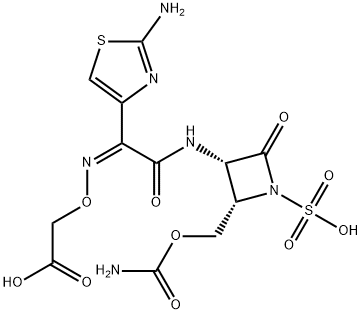
Canunonam is an injectable antibiotic, the second monobactam ever developed (the first being Squibb’s aztreonam). It is highly active against Gram negative bacteria, particularly pseudomom, and is reportedly effective in the treatment of pneumonia, cystitis, peritonitis and secondary infections.
Originator
Takeda (Japan)
Definition
ChEBI: An N-sulfonated monobactam antibiotic.
Antimicrobial activity
A synthetic monobactam with activity against common pathogenic organisms similar to that of aztreonam. It is resistant to hydrolysis by the common plasmid and chromosomal β-lactamases, but it can be hydrolyzed by ESBLs.
It is administered intravenously, achieving a concentration of c. 78 mg/L after a 20-min infusion of 1 g. The plasma halflife is 1.7 h and the plasma protein binding 18–28%. Carumonam is almost entirely eliminated in the glomerular filtrate, probenecid having no effect on excretion; 96% of labeled compound is found in the urine, with 3% in the feces. Between 68% and 91% of the dose appears in the urine within 24 h.
Side effects and clinical use are similar to those of aztreonam.





 China
China